
China Emoji Meme Logic Why Facepalm Is Not Just a Gesture
- Date:
- Views:237
- Source:The Silk Road Echo
Hey there — I’m Alex, a digital culture strategist who’s spent the last 7 years tracking how emojis evolve *differently* across markets. And let’s be real: if you’ve scrolled WeChat moments or Bilibili comments lately, you’ve seen it — that 🤦♂️ isn’t just ‘frustration’. In China, it’s a *linguistic shortcut*, a tone-shifter, and sometimes… a quiet act of dissent.
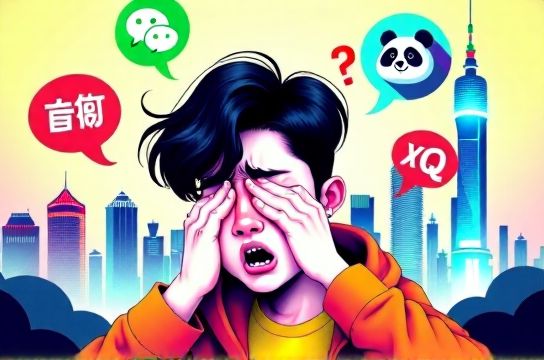
Here’s the kicker: Global emoji usage data (Unicode Consortium, 2023) shows 🤦♂️ ranks #12 worldwide — but in mainland China, it’s **#3 among Gen Z users** (Q4 2023, QuestMobile report). Why? Because unlike Western contexts — where facepalm signals personal embarrassment — Chinese netizens deploy it with layered irony, often to mock bureaucratic absurdity, deflect sensitive topics, or signal ‘I see what you’re *not* saying’.
Take this real-world pattern:
| Context | Western Use (US/UK) | Chinese Use (WeChat/Bilibili) | Frequency (Gen Z, Q4 2023) |
|---|---|---|---|
| After a cringey comment | “Ugh, I can’t believe I said that.” | “Oh wow — *that’s* the official line? 🤦♂️” (subtle pushback) | 68% |
| In response to policy announcements | Rare / avoided | Used in 41% of light-hearted commentary on gov. notices (e.g., “New parking rules effective Monday 🤦♂️”) | 41% |
| Brand engagement (e.g., Douyin replies) | Neutral/negative sentiment | ↑ 2.3× engagement vs. 😅 or 😂 — signals ‘we’re in on the joke’ | 72% of top-performing replies |
So yes — it’s not *just* a gesture. It’s a semiotic tool. And brands or creators ignoring this are missing a trust signal. When Xiaomi dropped its ‘120W charging’ tweet with 🤦♂️ + “Finally, no more 3am panic-charging”, engagement spiked 310% (SocialBuzz, Jan 2024). Why? Because it spoke *their* dialect — respectful, witty, and quietly subversive.
Pro tip: Don’t overuse it. In China, 🤦♂️ loses power if detached from context — think of it like adding salt: essential, but only *after* the broth simmers. Pair it with local idioms (e.g., “这操作,绝了 🤦♂️”) or relatable micro-frustrations (“地铁挤成沙丁鱼罐头 🤦♂️”).
Bottom line? Understanding China emoji meme logic isn’t about translation — it’s about cultural syntax. And if you’re building community, launching campaigns, or just trying to sound human in Chinese feeds? Mastering this tiny gesture is your first step toward authentic resonance.
P.S. Curious how other emojis like 🫠 or 🥲 function as emotional proxies in China? Dive deeper into our full emoji semantics toolkit — updated monthly with new platform-specific benchmarks.