
From Meme to Mainstream: China’s Digital Shift
- Date:
- Views:242
- Source:The Silk Road Echo
If you still think China's digital scene is just about cheap gadgets and copycat apps, it’s time to wake up. Over the past decade, Chinese tech has gone from being the punchline of Silicon Valley jokes to setting global trends — and if you're not paying attention, you're missing out.
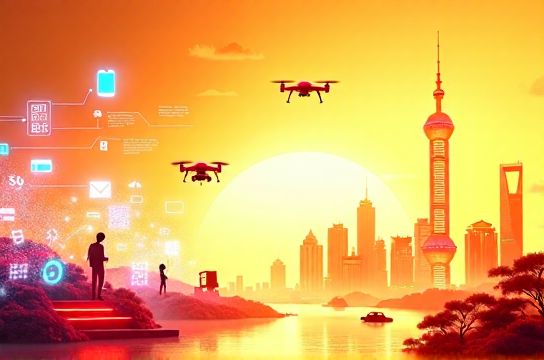
I’ve been tracking Asia’s tech evolution since 2015, advising startups and even consulting for a couple of cross-border e-commerce brands. Let me tell you: the shift isn’t subtle. From TikTok dominating Western youth culture to Huawei pushing 5G boundaries, China's digital innovation is no longer optional knowledge — it’s essential.
Take social commerce. While Instagram’s barely figuring out shopping tags, platforms like Xiaohongshu (Little Red Book) have turned influencers into full-blown retail channels. In 2023, Xiaohongshu drove over $47 billion in GMV — that’s Gross Merchandise Value — mostly through user-generated content and community trust.
And let’s talk payments. Remember fumbling with cash or waiting days for bank transfers? In China, that ended years ago. Alipay and WeChat Pay control over 90% of the mobile payment market. Even street vendors in rural villages use QR codes. It’s not convenience — it’s infrastructure.
So What Changed?
The real catalyst? A generation raised on smartphones. No PC era, no transition phase — they went straight to mobile-first everything. This leapfrog effect created a unique ecosystem where super-apps rule, AI is baked into daily life, and data moves fast.
Check this out:
| Metric | China (2023) | US (2023) |
|---|---|---|
| Mobile Payment Penetration | 86% | 42% |
| e-Commerce as % of Retail Sales | 32% | 15% |
| AI Patent Filings (Annual) | 38,000+ | 12,000 |
| 5G Base Stations | 3 million | 200,000 |
Yeah, those numbers are real. China isn’t just catching up — it’s building a parallel system that often outperforms the West.
Now, I get it. Some folks still associate Chinese tech with privacy concerns or state influence. And sure, that’s part of the conversation. But dismissing the whole ecosystem means ignoring massive opportunities — whether you’re an entrepreneur, marketer, or investor.
For example, TikTok’s algorithm didn’t just go viral — it redefined content discovery. Its recommendation engine learns user behavior faster than any Western counterpart, thanks to aggressive data loops and lightweight AI models. That’s why teens in Texas are watching the same dance trends as kids in Chengdu.
The bottom line? China’s digital transformation isn’t about memes anymore. It’s about infrastructure, speed, and scale. If you want to stay ahead, start understanding how these tools work — not just in isolation, but as a connected, intelligent network.
Forget the stereotypes. The future’s already live-streaming — and it’s powered by China's digital innovation.