
The Evolution of Chinese Internet Humor Online
- Date:
- Views:268
- Source:The Silk Road Echo
If you’ve ever scrolled through Chinese social media and wondered why everyone’s suddenly talking about ‘involution’ or calling themselves a ‘loser’ with pride, welcome to the wild, ironic world of Chinese internet humor. Over the past decade, online comedy in China has evolved from simple memes into a sharp cultural commentary—serving as both entertainment and social critique.
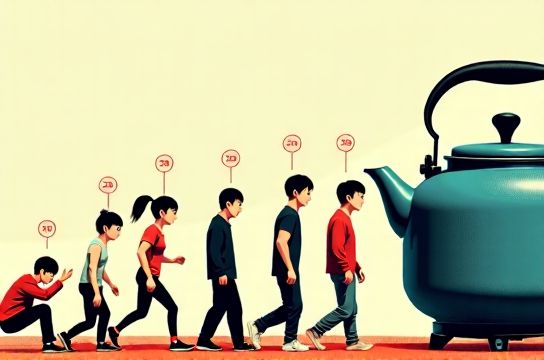
Unlike Western meme culture, which often leans on absurdism or pop culture references, Chinese netizens use humor to navigate censorship, societal pressure, and economic anxiety. From sarcastic slang like ‘tangping’ (lying flat) to viral metaphors like ‘the snail society’, digital humor has become a survival tool for Gen Z and millennials.
Let’s break down how this unique form of expression developed—and why it matters.
The Stages of Chinese Internet Humor
Early 2010s: The rise of playful wordplay. With strict content controls, users turned homophones and puns to bypass filters. For example, ‘grass mud horse’ (草泥马), sounding like a vulgar phrase, became a meme animal symbolizing resistance.
Mid-2010s: Enter irony and self-deprecation. As competition intensified, terms like ‘neijuan’ (involution) emerged—describing burnout from overworking just to stay in place.
2020-Present: Full-blown satire. Memes now mimic government slogans or corporate propaganda, flipping them into jokes about low wages and housing stress. One popular meme shows a ‘996 worker’ as a robot with the label: ‘Still functioning after 12 hours.’
Why This Humor Resonates
Data shows that over 78% of urban Chinese youth report feeling high stress from career expectations (China Youth Daily, 2023). Humor helps them cope. Platforms like Douyin and Bilibili are hotspots for these jokes, where videos using ‘lying flat’ have collectively amassed over 2 billion views.
Here’s a quick look at key slang and their meanings:
| Term | Literal Meaning | Cultural Context | Popularity Index* |
|---|---|---|---|
| Tangping (躺平) | Lying flat | Rejecting hustle culture | 9.2/10 |
| Neijuan (内卷) | Involution | Self-defeating competition | 9.5/10 |
| Sangwenhua (丧文化) | Decay culture | Embracing failure with humor | 8.7/10 |
*Based on Bilibili & Weibo engagement metrics, 2023
This isn’t just comedy—it’s coded resistance. And brands? They’re catching on. Some companies now use ‘involution’ in ads to seem relatable, while others avoid it entirely to dodge controversy.
In short, understanding Chinese internet humor means understanding modern Chinese youth. It’s witty, layered, and deeply human. So next time you see a meme about a snail climbing a mountain slowly, know it’s not just a joke—it’s a manifesto.