
How Short Videos Shape Chinese Internet Language
- Date:
- Views:316
- Source:The Silk Road Echo
If you've scrolled through Douyin or Kuaishou lately, you’ve probably noticed how fast internet slang evolves. But have you ever stopped to think—how did a 15-second clip redefine an entire language? Welcome to the new era of Chinese digital communication, where short videos aren’t just entertainment—they’re linguistic factories.
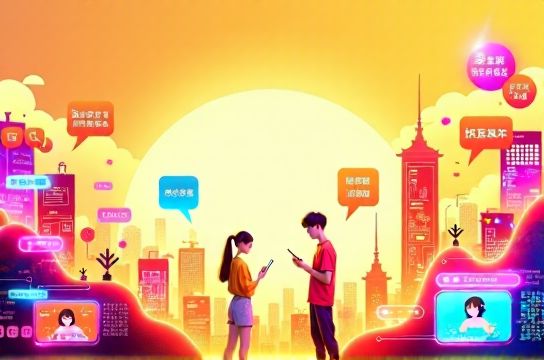
Let’s break it down: in 2023, China had over 980 million short video users, according to CNNIC. That’s nearly 70% of the population shaping and consuming content that spreads faster than traditional media ever could. And with every viral dance or meme, a new word is born—or an old one gets a wild twist.
Take the word “zui” (醉), which literally means “drunk.” Thanks to a popular short video trend where users exaggerated dizziness after fake drinking, it now sarcastically describes someone acting overly dramatic. This isn’t just slang—it’s a cultural shift powered by visual repetition and mass participation.
So how exactly do these platforms turn gestures into grammar? Here’s a quick look at the process:
The Viral Language Pipeline
| Stage | Time to Spread | Example |
|---|---|---|
| Origin (Creator) | Day 1 | “Lao tie, ne zui le!” (“Bro, you’re wasted!”) |
| Viral Challenge | Days 2–4 | 100K+ recreations with filters |
| Dictionary Entry | Within 6 months | “Zui” added to Baidu Slang Index |
| Mainstream Use | 6–12 months | Used in TV ads and news headlines |
As you can see, the lifecycle of a phrase today is lightning-fast. Compare that to pre-2016, when internet terms took years to gain traction. Now, thanks to algorithmic boosts and duet features, replication is instant.
But it’s not all fun and memes. Linguists like Dr. Li Wen from Peking University warn that this rapid evolution risks semantic erosion—where words lose precise meaning. For example, “baolie” (暴力), meaning “violent,” is now used humorously to describe spicy food. While creative, it may dilute serious contexts.
Still, the influence is undeniable. Brands are adapting fast. In a 2023 survey, 68% of marketers said they now hire KOLs (Key Opinion Leaders) specifically for their ability to use trending phrases authentically. One cosmetics brand saw a 40% increase in engagement after rewriting ad copy using platform-native expressions.
And here’s the kicker: even schools are noticing. Some Mandarin teachers now include popular video scripts in lessons to help students grasp colloquial usage. As one educator put it, “You can’t teach modern Chinese without watching Douyin.”
Looking ahead, the fusion of video and language will only deepen. With AI-generated avatars and voice cloning entering the space, we might soon see entirely new dialects emerge from virtual influencers. The message is clear: if you want to understand how Chinese is spoken today, stop reading textbooks—and start watching short videos.