
How Netizens Create New Words in Chinese Cyberspace
- Date:
- Views:353
- Source:The Silk Road Echo
Ever wondered how a random phrase like “打工人” (dǎgōng rén, 'laborer') suddenly becomes the go-to meme for every office worker in China? Welcome to the wild, fast-paced world of Chinese internet slang. As someone who’s been tracking digital culture in China for over a decade, I can tell you—this isn’t just about jokes. It’s a linguistic revolution driven by creativity, censorship, and social commentary.
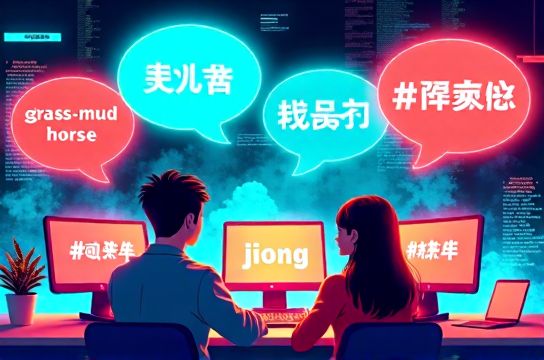
Chinese netizens are masters at crafting new words. Why? Because direct speech online is often censored. So instead, they use puns, homophones, and pop culture references to say what they really mean—without getting blocked. For example, ‘草泥马’ (cǎo ní mǎ) sounds innocent but is actually a clever phonetic twist on a vulgar phrase. These wordplays aren’t just funny—they’re acts of subtle resistance.
Let’s break down the most common methods used to create these viral terms:
| Method | Example | Meaning | Origin |
|---|---|---|---|
| Phonetic Substitution | 内卷 (nèijuǎn) | Involution – excessive competition | Academic term turned meme |
| Abbreviation + Irony | 社死 (shè sǐ) | Social death – extreme embarrassment | Short for 社交死亡 |
| Homophonic Puns | 蚌埠住了 (bèng bù zhù le) | ‘Can’t hold it’ – couldn’t stop laughing | Sounds like ‘being angry’ but means the opposite |
| Visual Emoticons | 栓Q | ‘Thank you’ said sarcastically | Mimics English with a mocking tone |
These neologisms spread fast. According to a 2023 report by iResearch, over 68% of urban Chinese youth use at least three internet-born terms daily. Platforms like Weibo, Douyin, and Xiaohongshu act as incubators—where a single post can spark nationwide usage.
But it’s not all fun and games. Some terms evolve into cultural critiques. Take 内卷 (nèijuǎn)—originally an academic concept describing unproductive competition—now used to describe everything from cutthroat jobs to parenting pressure. Its rise reflects real societal stress.
So, how do these words survive? Simplicity, humor, and relevance. They fill gaps in formal language and give people a voice—even when that voice has to whisper around censorship.
In short, Chinese internet slang isn’t just evolving language—it’s shaping identity, one meme at a time.