
Behind the Laughter: Understanding the Social Anxiety in China's Latest Buzzwords
- Date:
- Views:287
- Source:The Silk Road Echo
You’ve probably seen it online — a meme, a sarcastic phrase, or some oddly relatable slang that makes you laugh… then pause. Wait, why does this feel so familiar? Welcome to the world of China’s latest internet buzzwords, where humor isn’t just for laughs — it’s a survival tactic. Behind every viral phrase like “involution” (内卷) or “lying flat” (躺平), there’s a deeper story about social anxiety, pressure, and a generation trying to cope.
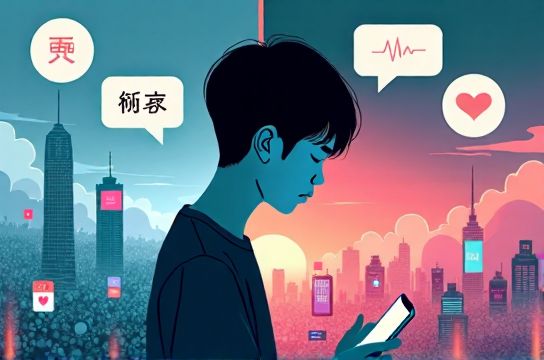
Let’s be real: life in modern China is *intense*. From sky-high housing prices to cutthroat job markets, young people are feeling the squeeze. And instead of breaking down, they’re breaking jokes. Take ‘tang ping’ (躺平), literally ‘lying flat’ — it started as a quiet rebellion against overwork culture. No more grinding 9-to-9 weekends just to survive. Just… lie down. Breathe. Say no. It sounds lazy, but it’s actually a cry for sanity in a system that never stops demanding more.
Then there’s ‘neijuan’ (内卷), or ‘involution’. Imagine running on a treadmill — you’re sprinting, sweating, exhausted — but going nowhere. That’s neijuan. It’s not competition; it’s pointless over-effort where everyone loses. Students study 16 hours a day just to edge out peers. Workers volunteer overtime to look ‘committed’. The prize? Barely staying in place. So what do people do? They meme it. They joke about being ‘卷王’ (the involution king), laughing so they don’t cry.
And who could forget ‘emo’? Once a music genre, now a state of mind. One minute you’re fine, the next — boom — you’re scrolling through Weibo at 2 a.m., whispering ‘I’m so emo’. It’s not clinical depression (though it can be linked), but a shared emotional shorthand for feeling overwhelmed, lost, or just… done.
These words aren’t random. They’re cultural signals. A way for millions to say, ‘I’m not okay, but I’m not alone.’ The internet becomes a safe space — anonymous, expressive, full of inside jokes that outsiders might miss. But insiders? They get it instantly.
So why does this matter? Because language shapes reality. When young people label their stress with clever slang, they’re not just venting — they’re resisting. They’re building communities. And slowly, they’re forcing society to listen. Can you blame them? When the system feels rigged, humor becomes armor.
In the end, these buzzwords aren’t just trends. They’re emotional lifelines. And maybe, just maybe, they’re the first step toward change.