
Meme Diplomacy: How Chinese Netizens Use Humor to Navigate Censorship
- Date:
- Views:250
- Source:The Silk Road Echo
In the digital age, where information flows faster than ever, Chinese netizens have mastered an art form that's equal parts clever, cheeky, and quietly rebellious—meme diplomacy. Behind the Great Firewall, where direct criticism can vanish faster than a deleted Weibo post, internet users are turning to humor as their secret weapon. From sarcastic puns to absurd animal GIFs, memes have become a coded language for social commentary, allowing people to speak truth to power—without actually saying it.
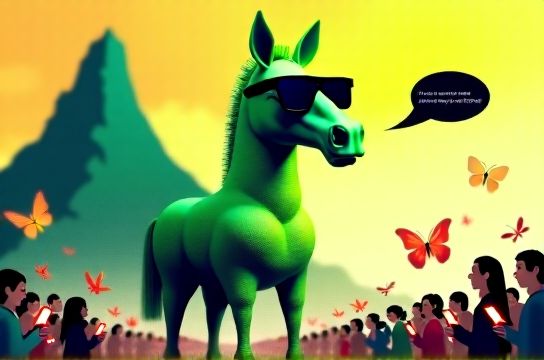
Take the infamous “Grass Mud Horse” meme—a furry, llama-like creature that became a viral sensation. On the surface? Adorable. But say it out loud in Mandarin (cǎo ní mǎ), and you’ll hear something that sounds *very* similar to a well-known profanity. This phonetic play wasn’t accidental—it was protest disguised as whimsy. According to China Digital Times, the Grass Mud Horse meme generated over 10 million views across platforms before being scrubbed from official channels.
But it’s not just about shock value. Memes serve a deeper purpose: they build community. When users share a frog wearing sunglasses or a panda shrugging, they’re not just laughing—they’re signaling, “I see what you see.” It’s digital solidarity in JPEG form.
Why Memes Work Under Censorship
Censors scan for keywords, not context. That’s why netizens pivot to absurdity. A post about “river crab” (a homophone for “harmony,” often used to mock censorship) might fly under the radar, while “democracy” gets flagged instantly. The result? A thriving ecosystem of satire that evolves faster than algorithms can catch up.
| Meme Symbol | Literal Meaning | Hidden Message | Platform Reach (Est.) |
|---|---|---|---|
| Grass Mud Horse | Fictional animal | Phonetic insult to censorship | 10M+ |
| River Crab | Crab in a river | “Harmony” = censorship | 5M+ |
| Baozi (Steamed Bun) | Common food | Satire of political figures | 3M+ |
This isn’t just rebellion—it’s resilience. As one anonymous WeChat user put it: “If we can’t speak plainly, we’ll speak in riddles. And if the riddles get banned, we’ll draw cartoons.”
Platforms like Douban, Bilibili, and even QQ groups have become meme incubators, where irony spreads faster than state-approved narratives. And while some memes are fleeting, others evolve into full-blown subcultures—like the emo youth trend, where teens use melancholic anime clips to express disillusionment.
So next time you see a silly meme of a cat typing on a keyboard, remember: in China’s digital underground, laughter isn’t just laughter. It’s resistance, reloaded.