
Explaining Chinese Buzzwords From Social Media Feeds
- Date:
- Views:288
- Source:The Silk Road Echo
If you've ever scrolled through Chinese social media—whether it's Weibo, Xiaohongshu, or Douyin—you've probably stumbled upon phrases that sound like secret codes. Words like '内卷 (nèijuǎn)' or '躺平 (tǎngpíng)' pop up everywhere, but what do they really mean? Let’s decode the hottest Chinese buzzwords sweeping the internet, understand their cultural roots, and see how they reflect the mindset of today’s youth.
Why These Buzzwords Matter
Chinese netizens are creative. Faced with censorship and societal pressure, they’ve developed a linguistic toolkit—part satire, part survival strategy. These terms aren’t just slang; they’re social commentary wrapped in irony and humor.
Top 5 Must-Know Chinese Internet Buzzwords
1. 内卷 (Nèijuǎn) – Involution
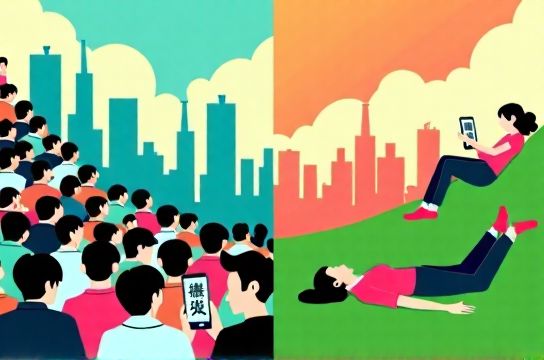
Literally meaning 'involution,' this term describes a situation where people work harder and harder but gain nothing collectively. Think of students pulling all-nighters just to outdo each other—with no real progress. It’s burnout disguised as productivity.
2. 躺平 (Tǎngpíng) – Lie Flat
In response to 'nèijuǎn,' some young people choose to 'lie flat'—opting out of the rat race. It’s not laziness; it’s a quiet rebellion against endless competition. One survey found that 62% of urban millennials feel pressured to escape high-cost lifestyles.
3. 打工人 (Dǎgōng rén) – Laborer / Working Stiff
This self-deprecating term turns 'employee' into a meme. Everyone from office workers to delivery drivers calls themselves 'dǎgōng rén.' It reflects solidarity in struggle—and yes, a bit of sarcasm about corporate life.
4. 工具人 (Gōngjù rén) – Human Tool
Sad but true: many feel used—by bosses, partners, even friends. This term refers to someone treated as a disposable resource. A 2023 Zhihu poll showed 48% of respondents admitted feeling like 'gōngjù rén' at work.
5. 花学 (Huā xué) – Flower Science
A playful term from reality shows, analyzing drama like a PhD thesis. Fans dissect relationships, power moves, and emotions—all for fun. It’s gossip turned academic, and it’s wildly popular on Bilibili.
Cultural Insight: More Than Just Slang
These words reveal deep societal shifts. Young Chinese are redefining success, questioning hustle culture, and seeking mental peace. The government has even commented on 'tǎngpíng,' worried it signals disengagement.
Buzzword Comparison Table
| Buzzword | Literal Meaning | Social Context | Popularity Index* |
|---|---|---|---|
| 内卷 (nèijuǎn) | Involution | Excessive competition | 9.5/10 |
| 躺平 (tǎngpíng) | Lie Flat | Anti-hustle movement | 9.0/10 |
| 打工人 (dǎgōng rén) | Working stiff | Workplace identity | 8.7/10 |
| 工具人 (gōngjù rén) | Human tool | Emotional labor | 7.8/10 |
| 花学 (huā xué) | Flower Science | Reality show fandom | 7.5/10 |
*Based on Baidu Index and Weibo trends (Q2 2024)
Final Thoughts
Understanding these buzzwords isn’t just about language—it’s about empathy. They capture frustration, humor, and hope in modern China. So next time you see 'tǎngpíng,' don’t dismiss it as apathy. It might just be a cry for balance in a world spinning too fast.