
Popular Chinese Internet Slang Among Urban Youth
- Date:
- Views:226
- Source:The Silk Road Echo
If you've been scrolling through Chinese social media lately—whether it's Weibo, Xiaohongshu, or Douyin—you've probably stumbled upon phrases like 'xíngjiǎo' or 'nèi juǎn' and wondered: what on earth do they mean? Don’t sweat it. Even native speakers sometimes need a decoder ring for the fast-evolving slang of urban Chinese youth.
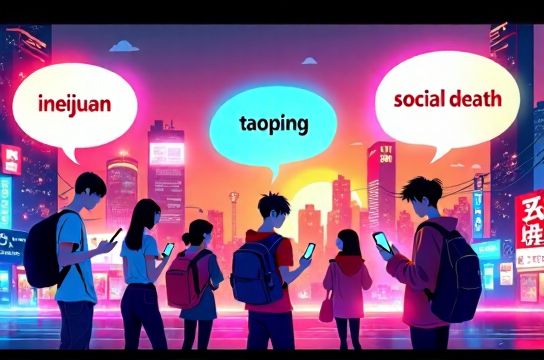
Today’s internet lingo isn’t just playful banter—it reflects real social trends, economic pressures, and Gen Z’s razor-sharp sense of humor. Let’s dive into the most viral terms, decode their meanings, and understand why they’ve gone from niche to nationwide in under six months.
Top 5 Slang Terms Taking Over China’s Digital Scene
These aren’t your textbook Mandarin phrases. They’re born from memes, livestreams, and collective frustration—or joy. Here are the ones dominating conversations in 2024:
| Slang Term | Pronunciation | Literal Meaning | Cultural Context |
|---|---|---|---|
| 内卷 (nèi juǎn) | nay-jwen | involution | Describes cutthroat competition where effort doesn’t equal reward—like working overtime just to stay even. |
| 躺平 (tǎng píng) | tahng-ping | lie flat | A passive resistance to societal pressure; choosing minimalism over burnout. |
| 摆烂 (bǎi làn) | bai-lahn | display rot | When you stop trying because the system is rigged anyway. |
| 社死 (shè sǐ) | sher-suh | society death | That moment when embarrassment makes you wish the ground would swallow you whole. |
| 破防 (pò fáng) | pwo-fang | break defense | Emotionally overwhelmed—often used when a sad meme hits too hard. |
According to a 2023 survey by iResearch, over 68% of urban youth aged 18–28 use at least two of these terms weekly in digital conversations. And it’s not just texting—these words appear in ad campaigns, TV shows, and even corporate wellness programs.
Why These Words Matter
Take nèi juǎn. It started in academia but now describes everything from job markets to parenting. A recent Tencent report found that 74% of white-collar workers in Tier-1 cities feel trapped in 'involution loops'—working longer hours for stagnant wages.
Enter tǎng píng, the anti-hustle anthem. While some critics call it lazy, supporters see it as self-preservation. As one 25-year-old Shenzhen coder put it: “If I can’t win the race, I’m stepping off the track.”
And let’s talk shè sǐ—social death. With 92% of Gen Z using video-based platforms daily (CNNIC, 2024), the fear of public embarrassment has never been higher. One slip-up on livestream? That’s instant shè sǐ.
The Evolution of Online Identity
These slang terms aren’t random. They form a coded language of resilience. When someone says pò fáng, they’re not just saying they’re sad—they’re signaling emotional honesty in a culture that often values stoicism.
Brands have caught on. In 2023, beverage giant Nongfu Spring launched a campaign around tǎng píng, promoting relaxation with ads showing people napping in parks. Sales among 18–24 year-olds jumped 18% that quarter.
So next time you hear bǎi làn, don’t dismiss it as laziness. It might be a cry for systemic change—or just someone needing a mental health day.
In short, understanding this slang isn’t just about staying trendy. It’s about tuning into the heartbeat of modern Chinese youth culture—one meme at a time.