
How Online Buzzwords China Reflect Social Change
- Date:
- Views:228
- Source:The Silk Road Echo
In the fast-paced digital era, Chinese internet slang isn't just playful lingo—it's a cultural mirror. From neijuan (involution) to tangping (lying flat), these viral buzzwords capture the heartbeat of a generation navigating pressure, identity, and societal shifts.
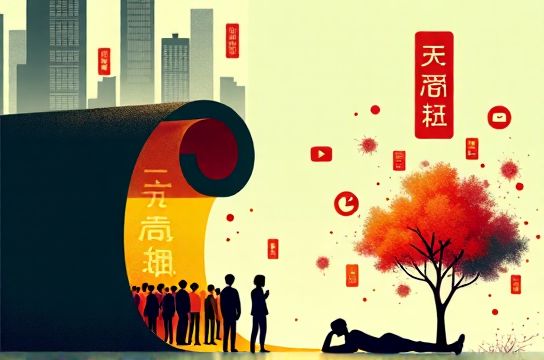
China’s online community, with over 1.05 billion netizens (CNNIC, 2023), turns everyday frustrations into linguistic creativity. These terms aren’t random—they reflect deep social currents. Let’s unpack how digital expressions reveal real-world change.
The Rise of 'Lying Flat' and 'Involution'
Tangping, or “lying flat,” emerged in 2021 as a quiet rebellion against burnout. It champions minimal effort and disengagement from relentless competition. Contrast that with neijuan, meaning “involution”—a term borrowed from anthropology to describe self-defeating overwork without progress.
Why did these terms go viral? Because they speak to youth disillusionment. A 2022 survey by Peking University found that 68% of young professionals feel trapped in high-pressure jobs with little upward mobility.
| Buzzword | Literal Meaning | Social Message | Year Popularized |
|---|---|---|---|
| 内卷 (Neijuan) | Involution | Excessive competition leading to exhaustion | 2020 |
| 躺平 (Tangping) | Lying Flat | Rejecting hustle culture for peace | 2021 |
| 打工人 (Dagongren) | Working Dog | Sarcastic pride in blue-collar struggle | 2020 |
| 佛系 (Fóxì) | Buddha-like | Chill, detached lifestyle | 2017 |
These words are more than jokes—they’re coping mechanisms. When office workers call themselves dagongren (“working dogs”), it’s both self-mockery and solidarity.
Digital Language as Social Commentary
The Chinese government hasn’t ignored this trend. While some terms face censorship, others slip through as satire. For example, fengjing (“scenery”) was used to mock lockdowns—“enjoying the scenery at home” meant being stuck indoors during pandemic restrictions.
Platforms like Weibo and Douyin shape how quickly slang spreads. A single post can ignite national debate. In 2023, the phrase jiǎndān rénshēng (“simple life”) trended after a viral video showed a man quitting his job to live off-grid in Yunnan.
From Humor to Resistance
What makes Chinese internet slang powerful is its dual nature: humorous on the surface, deeply critical underneath. Take 996, referring to the grueling 9 AM–9 PM, 6-day workweek. Once a corporate norm, it became a symbol of exploitation after tech workers protested on GitHub in 2019.
Now, younger generations use irony to resist. Saying “I’m just a tiny potato” (xiǎo tǔdòu) downplays ambition while subtly rejecting systemic pressure.
Why This Matters Globally
China’s digital lexicon offers insights into universal struggles: work-life balance, mental health, and economic anxiety. As globalization blurs cultural lines, understanding these terms helps us grasp how youth worldwide express dissent—not through protests, but through memes and metaphors.
In short, Chinese internet slang isn’t fleeting noise. It’s a coded diary of a society in flux, where every trending word tells a story of resilience, fatigue, and hope.