
Chinese Internet Slang Evolution Over the Past Decade
- Date:
- Views:329
- Source:The Silk Road Echo
If you've been scrolling through Chinese social media over the last ten years, you’ve probably seen phrases like “打工人” (dǎ gōng rén), “内卷” (nèi juǎn), or “躺平” (tǎng píng) pop up everywhere. These aren’t just random buzzwords—they’re cultural snapshots of a generation navigating rapid change, economic pressure, and digital life. Let’s dive into how Chinese internet slang has evolved from playful memes to powerful social commentary.
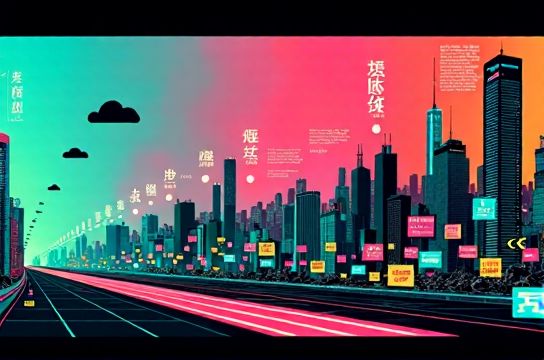
Back in the early 2010s, internet slang was all about fun and creativity. Words like “给力” (gěi lì, meaning 'awesome') and “神马都是浮云” (shén ma dōu shì fú yún, 'everything is fleeting clouds') spread like wildfire on platforms like Weibo. Fast forward to today, and the tone has shifted. Slang now reflects deeper societal issues—burnout, inequality, and youth disillusionment.
Take “内卷” (nèi juǎn), for example. Originally an academic term describing inefficient competition, it went viral around 2020 to describe the exhausting rat race in education and jobs. Then came “躺平” (tǎng píng), or 'lying flat'—a quiet rebellion against overwork. These terms aren’t just jokes; they’re cries for sanity in a hyper-competitive world.
Here’s a quick look at how key slang terms have evolved:
| Year | Popular Term | Literal Meaning | Social Context |
|---|---|---|---|
| 2013 | 土豪 (tǔ háo) | Uncultured rich person | Rise of new wealth and consumerism |
| 2016 | 佛系 (fó xì) | Buddha-like mindset | Detachment from competition |
| 2020 | 内卷 (nèi juǎn) | Involution | Workplace and academic burnout |
| 2021 | 躺平 (tǎng píng) | Lying flat | Rejecting hustle culture |
| 2023 | 打工人 (dǎ gōng rén) | Working stiff | Shared identity among urban laborers |
What’s fascinating is how these terms spread. Unlike Western memes that often rely on images, Chinese netizens love wordplay—homophones, puns, and abbreviations. For instance, “社死” (shè sǐ) means 'social death'—that cringe moment when you embarrass yourself online. It’s short, sharp, and instantly relatable.
Platforms like Douyin, Bilibili, and Xiaohongshu have accelerated this evolution. A term can go from niche to national in days. And while some slang fades fast, others embed themselves in everyday speech. Even state media now uses “打工人” with a mix of irony and empathy.
In essence, Chinese internet slang isn’t just about being trendy—it’s a mirror. It shows how young people cope, resist, and find humor in a world that often feels overwhelming. So next time you see “破防了” (pò fáng le, 'my defenses are broken') or “摆烂” (bǎi làn, 'letting things rot'), know it’s more than a meme. It’s a movement.