
Explaining Chinese Buzzwords Behind Social Media Frenzies
- Date:
- Views:246
- Source:The Silk Road Echo
If you've scrolled through Chinese social media lately, you've probably seen phrases like 内卷 (nèijuǎn), 躺平 (tǎngpíng), or 社死 (shèsǐ) popping up everywhere. These aren't just random slang—they're cultural snapshots of a generation navigating pressure, identity, and digital life in modern China.
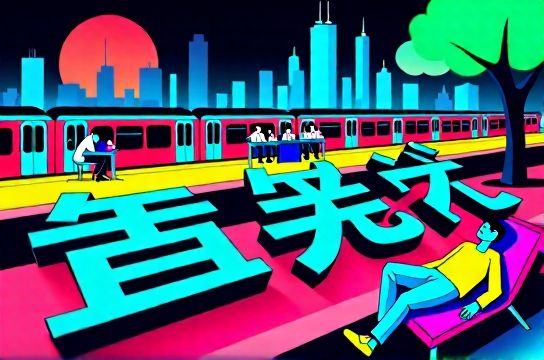
Let’s decode the buzzwords fueling online frenzies and what they reveal about society beneath the memes.
What Are These Words, Anyway?
Chinese internet slang evolves fast—some terms last weeks; others embed into everyday speech. The most viral ones often reflect collective emotions: frustration, irony, or quiet rebellion.
Take 内卷 (nèijuǎn), literally "involution." It started as an academic term but now describes cutthroat competition where everyone works harder for the same result—like students pulling all-nighters just to stay average. A 2023 Peking University survey found 68% of undergraduates felt "trapped in academic nèijuǎn." Ouch.
In response? 躺平 (tǎngpíng), or "lying flat." Not literal laziness—but a pushback against burnout culture. Imagine rejecting promotions, working minimal hours, and prioritizing peace over productivity. It went viral when a blogger wrote: "I choose to lie down. I’m not getting crushed by the system."
Then there’s 社死 (shèsǐ)—"social death." That cringe moment when you wave at someone who wasn’t looking, and the whole café notices. Urban Dictionary meets Confucian face-saving.
Why Do These Words Spread So Fast?
Social platforms like Weibo, Xiaohongshu, and Douyin turbocharge these terms. One user shares a "I’m so nèijuǎn I forgot my mom’s birthday" post—it gets 50k likes, spawns memes, and suddenly, it’s mainstream.
Here’s a look at three major buzzwords and their reach:
| Buzzword | Literal Meaning | Weibo Hashtag Views | Primary User Group |
|---|---|---|---|
| 内卷 (nèijuǎn) | Involution | 14.3 billion | Ages 18–35, urban professionals |
| 躺平 (tǎngpíng) | Lying flat | 8.7 billion | Gen Z, freelancers |
| 社死 (shèsǐ) | Social death | 5.2 billion | Teens to mid-20s |
Notice a pattern? They’re all coping mechanisms. In a world of sky-high housing costs and competitive job markets, language becomes therapy.
From Meme to Movement
Some words even spark real-world impact. After "lying flat" trended, state media criticized it as "defeatist." But the backlash proved its relevance—people were tired. A 2022 Tencent report showed 41% of young workers considered "quiet quitting," echoing global trends.
Meanwhile, brands jumped on the bandwagon. Coffee chains sold "anti-nèijuǎn" lattes. Fashion labels dropped "tǎngpíng chic" loungewear. Capitalism co-opts resistance—classic.
The Bigger Picture
These buzzwords aren’t just funny phrases. They’re emotional shorthand for systemic pressures. When "involution" replaces long essays on inequality, you know something’s up.
And yes, the West has equivalents—"hustle culture," "quiet quitting," "cringe"—but Chinese netizens package it with poetic irony. Where Americans say "I’m burnt out," a Chinese Gen Z might post: "我彻底躺平了" (I’ve completely lain flat).
So next time you see one of these terms, don’t just laugh. Read between the characters. There’s a story—and a struggle—behind every syllable.