
Decoding Popular Chinese Buzzwords Behind Social Media Frenzy
- Date:
- Views:305
- Source:The Silk Road Echo
If you've scrolled through Chinese social media lately, you’ve probably seen phrases like 内卷 (nèijuǎn), 躺平 (tǎngpíng), or 破防 (pòfáng) popping up everywhere. These aren’t just random slang—they’re cultural snapshots of a generation navigating pressure, identity, and digital life in modern China.
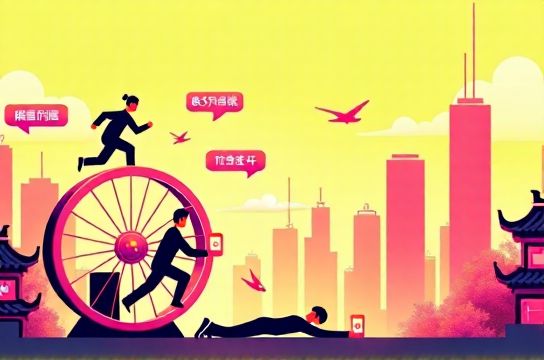
Let’s break down the most viral Chinese buzzwords that are shaping online discourse—and what they reveal about society beneath the memes.
What Are These Buzzwords, Really?
Chinese internet slang evolves fast. Driven by platforms like Weibo, Douyin, and Xiaohongshu, these terms often start as jokes but quickly become tools for expressing real emotions—frustration, irony, resilience.
Take 内卷 (nèijuǎn), literally 'involution.' It describes cutthroat competition where people work harder but gain nothing. A student studies until 2 a.m. only to find others studying until 3 a.m.—everyone exhausts themselves, yet the outcome stays the same. According to a 2023 survey by Peking University, over 68% of urban youth feel trapped in some form of 'involution,' whether at school or work.
In response? 躺平 (tǎngpíng)—'lying flat.' Not literal laziness, but a quiet rebellion against burnout. It’s choosing minimal effort to reclaim peace. While critics call it defeatist, supporters see it as self-preservation. The term surged on Weibo with over 1.2 billion views in 2022 alone.
Then there’s 破防 (pòfáng), meaning 'emotional defense broken.' Originally from gaming (when a player’s defense is shattered), it now describes moments when someone is deeply moved—like seeing a touching story or facing unexpected kindness. It’s vulnerability celebrated, not hidden.
Why Do These Words Go Viral?
Buzzwords spread because they name unspoken feelings. In a high-pressure society, having a word for shared stress creates connection. They’re also highly meme-able—short, punchy, visual.
Here’s a quick look at top buzzwords and their reach:
| Buzzword | Literal Meaning | Social Meaning | Weibo Views (2023) |
|---|---|---|---|
| 内卷 (nèijuǎn) | Involution | Excessive competition with no gain | 950 million |
| 躺平 (tǎngpíng) | Lying flat | Rejecting societal pressure | 1.2 billion |
| 破防 (pòfáng) | Defense broken | Emotionally overwhelmed | 780 million |
| 社死 (shèsǐ) | Social death | Extreme embarrassment | 620 million |
The Bigger Picture
These words aren’t just trends—they reflect a shift in values. Young Chinese netizens use humor and irony to cope with economic uncertainty, job scarcity, and rising living costs. When someone says 'I’m lying flat,' they might really be saying, 'I need a break.'
And while authorities sometimes push back—calling 'lying flat' unpatriotic—the public keeps using them. Why? Because they fit. As one Zhihu user put it: 'These words are our emotional toolkit.'
So next time you see '破防了!' in a comment, know it’s more than a joke—it’s a cry, a laugh, and a sigh all in one.