
Exploring Chinese Internet Slang in 2024 Culture Trends
- Date:
- Views:345
- Source:The Silk Road Echo
If you've scrolled through Chinese social media in 2024, you’ve probably seen phrases like ‘XSWL’, ‘YYDS’, or ‘NMSL’ popping up everywhere. But what do they mean? And why are millions of netizens using them daily? Welcome to the wild, witty, and sometimes wilder world of Chinese internet slang — where brevity meets creativity, and a single acronym can carry a universe of emotion.
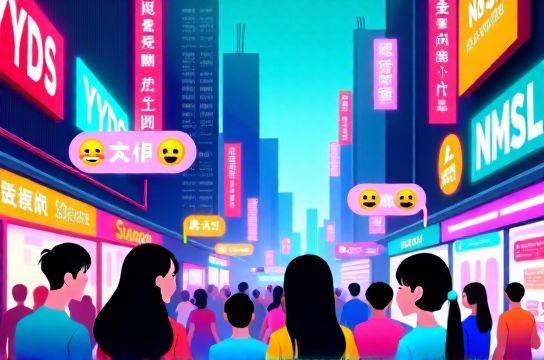
The Rise of Pinyin-Powered Expressions
In China’s fast-paced digital culture, typing efficiency is king. That’s why netizens have turned pinyin abbreviations into a language of their own. These aren’t just shortcuts — they’re cultural markers, inside jokes, and emotional amplifiers all rolled into one.
Take YYDS, short for Yǒngyuǎn de shén (永远的神), meaning “eternal god” — now used to praise anything from your favorite athlete to a life-changing bowl of ramen. It was so ubiquitous in 2021 that it won Baidu’s Word of the Year, and guess what? It’s still going strong in 2024.
Decoding the Top 5 Slang Terms of 2024
Let’s break down the most viral expressions lighting up Weibo, Xiaohongshu, and Douyin this year:
| Slang | Full Pinyin | Literal Translation | Actual Meaning | Usage Context |
|---|---|---|---|---|
| YYDS | Yǒngyuǎn de shén | Forever God | Something or someone is absolutely amazing | Praising idols, food, sports wins |
| XSWL | Xiào sǐ wǒ le | Laughed to death | I’m dying of laughter | Reacting to memes or funny videos |
| NMSL | Nǐ mā sǐ le | Your mom died | A harsh insult (use carefully!) | Online arguments, often censored |
| TZZ | Tài zǎo zhī | Too early knowledge | Spoiler alert! | Discussing plot twists in shows |
| DBQ | Duì bù qǐ | Sorry | Quick apology, often sarcastic | Mistakes or playful blame-shifting |
More Than Just Acronyms: Emoji & Visual Language
It’s not all text. Emojis, stickers, and even homophones play a huge role. For example, the number 886 means “bye-bye, later” because it sounds like bā bā liù — close enough to “bye” in Mandarin ears. Similarly, 520 stands for “I love you” (wǔ èr líng ≈ wǒ ài nǐ).
Cultural Insight: Why This Matters
Chinese internet slang isn’t just fun and games — it reflects deeper societal trends. The rise of terms like Zěnme le? (怎么了? – “What’s wrong?”) turned meme during political tensions shows how language becomes a tool for subtle expression under censorship.
Moreover, brands are catching on. In 2024, companies like Li-Ning and Perfect Diary dropped ads using XSWL and YYDS to connect with Gen Z. It works — campaigns using slang see up to 40% higher engagement on Douyin.
Pro Tips for Learners & Marketers
- Context is key: NMSL might get you banned in a chat group — know when to use it (hint: never).
- Stay updated: Slang evolves fast. Follow trending hashtags on Weibo like #网络用语# (internet slang).
- Don’t force it: Using YYDS for everything makes you look try-hard.
In 2024, understanding Chinese internet slang isn’t just about fitting in — it’s about tapping into the heartbeat of digital China. Whether you're a language learner, marketer, or just curious, these expressions offer a front-row seat to how youth culture shapes communication in one of the world’s most dynamic online spaces.