
How Explaining Chinese Buzzwords Bridges Generational Gaps
- Date:
- Views:259
- Source:The Silk Road Echo
Ever tried explaining '社死' (she si) or '内卷' (nei juan) to your parents? If you’ve seen their confused faces, you’re not alone. But here’s the twist—teaching older generations modern Chinese buzzwords isn’t just fun; it’s a powerful way to bridge the generational gap.
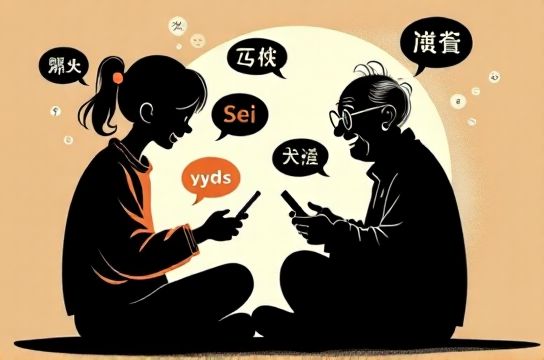
In today’s fast-evolving digital world, language evolves faster than ever. A 2023 survey by Peking University found that over 68% of urban youth use at least three internet slang terms daily. Meanwhile, only 22% of people aged 50+ understand them. That’s a communication chasm waiting to be filled.
But why does this matter? Because language isn’t just about words—it’s about shared experience. When Grandma finally gets what '躺平' (tang ping), or 'lying flat,' really means, she’s not just learning slang. She’s connecting with her grandkid’s worldview.
Why Buzzwords Matter Across Generations
Chinese internet slang often reflects societal pressures. Take '内卷', meaning 'involution'—a term describing cutthroat competition where everyone works harder but gains little. It resonates deeply with young professionals and students. When parents understand this, they gain empathy for their children’s stress.
Likewise, 'emo' (short for emotional) isn’t just whining—it’s a cultural signal of mental health awareness. Explaining these terms opens doors to deeper conversations about well-being, ambition, and life choices.
Top 5 Buzzwords to Teach Your Parents
Ready to start? Here are five high-impact slang terms that spark meaningful talks:
| Buzzword | Literal Meaning | Cultural Context | Why It Connects Generations |
|---|---|---|---|
| 内卷 (nèi juǎn) | Involution | Excessive competition in education/work | Helps parents see workplace pressure beyond "just work harder" |
| 躺平 (tǎng píng) | Lying flat | Rejecting societal pressure to overachieve | Starts dialogue on work-life balance and success definitions |
| 社死 (shè sǐ) | Social death | Extreme embarrassment in public | Relatable across ages—everyone remembers an awkward moment |
| 凡尔赛 (fán ěr sài) | Versailles | Humblebragging about luxury life | Teases out discussions on materialism and social image |
| 破防 (pò fáng) | Defense broken | Emotionally overwhelmed | Normalizes vulnerability in emotional expression |
Sharing these isn’t just translation—it’s cultural storytelling. For example, when you explain that '凡尔赛' mocks people who 'casually' flaunt wealth, your parents might chuckle and recall their own generation’s status symbols—like owning a bicycle in the 80s.
Tips for Teaching Buzzwords Without Boredom
- Use real-life moments: After a family argument, say, “Okay, I’m feeling total 破防 right now,” then explain.
- Create flashcards: Make bilingual cards with examples. Bonus points for doodles!
- Watch variety shows together: Programs like Rap of China or Happy Camp are goldmines of slang.
The goal isn’t fluency—it’s connection. As one 58-year-old WeChat user shared: “When my daughter taught me 社死, I finally understood why she didn’t want to attend that reunion. It wasn’t rudeness—it was fear.”
In a world where tech divides age groups, something as simple as slang can become a bridge. So go ahead—text your mom the word emo and see what happens. You might just start the most honest conversation you’ve had all year.