
The Rise of 'Emo' in Chinese Cyberspace: A New Wave of Emotional Expression
- Date:
- Views:436
- Source:The Silk Road Echo
You’ve probably seen it in your WeChat group chats or Douyin comments—someone drops a single word: 'Emo.' No explanation, no emoji, just two little letters carrying the weight of a thousand sad songs. But what does 'emo' really mean in China today? And why is this internet slang blowing up across Chinese social media?
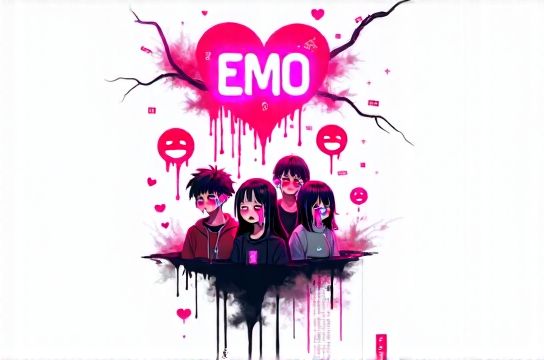
Spoiler: It’s not about screaming into a mic with spiky hair anymore. In China, 'emo' has evolved into something way more subtle—and way more relatable.
Originally short for 'emotional,' the term 'emo' came from Western punk and hardcore scenes in the '90s. But fast forward to 2024, and Chinese netizens have fully adopted—and adapted—it. Now, saying you’re 'emo' doesn’t mean you’re part of a music subculture. It just means you’re feeling down, nostalgic, or overwhelmed by life’s little stresses. Think: staying up late scrolling through old photos, missing someone you can’t text, or just feeling kind of… blah.
It’s become the go-to excuse for skipping plans: “Sorry guys, I’m too emo tonight.” Or a self-aware joke when you cry during a KFC commercial. The beauty of 'emo' in China is its vagueness—it’s emotional, but not serious enough for therapy. It’s real, but safe to laugh at.
Platforms like Xiaohongshu, Bilibili, and Weibo are flooded with 'emo content': melancholic poetry over lo-fi beats, black-and-white selfies with rainy window backdrops, or captions like 'Another night, another round of existential dread.' But don’t mistake this for depression—most users treat 'emo' as a temporary mood, almost like wearing a mental hoodie.
And brands? They’ve noticed. From beverage companies dropping limited 'Emo Nights' packaging to fashion labels using 'quiet sadness' as a selling point, emotional authenticity is now marketable. One popular clothing line even launched a slogan: 'Wear your emo, not your ego.' Clever? Yes. Capitalizing on Gen Z’s emotional language? Absolutely.
But here’s the deeper side: the rise of 'emo' reflects a cultural shift. In a society where emotional restraint was once the norm, young Chinese people are reclaiming space to feel openly—even if it’s behind a meme or a sarcastic comment. It’s not rebellion; it’s soft resistance. A way to say, 'I’m not okay,' without breaking down.
So next time you see 'emo' floating through your feed, don’t scroll past it. It might just be someone quietly reaching out—or simply surviving another day with style, sadness, and a little bit of humor.