
Chinese Net Slang Evolution From Forums to Smartphones
- Date:
- Views:217
- Source:The Silk Road Echo
If you've ever scrolled through a Chinese social media feed and felt like everyone was speaking a secret code, you're not alone. From early BBS forums to today's smartphone-driven WeChat and Xiaohongshu chats, Chinese net slang has evolved faster than anyone could predict. It’s not just about shortcuts—it’s a cultural revolution wrapped in emojis, puns, and playful rebellion.
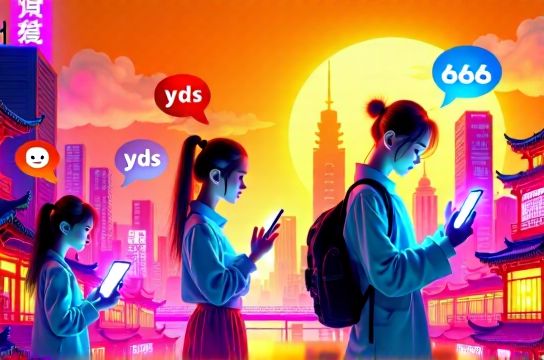
The Birth of Digital Dialects
Back in the early 2000s, internet forums (BBS) were the breeding ground for China’s first wave of online lingo. With limited bandwidth and slow typing speeds, users got creative. Numbers became symbols: 555 stood for crying (sounds like 'wuwuwu'), while 886 meant 'bye-bye, goodbye'. These weren’t just abbreviations—they were emotional shorthand.
Then came the golden age of homophones. Words like meimei (妹妹, little sister) turned into flirtatious terms, and GG (哥哥, big brother) became a universal male handle. Puns ruled: jiujiu (舅舅, uncle) sounded like '99', sparking endless memes.
Smartphones Supercharged the Slang Machine
When smartphones hit, everything accelerated. Voice input, emoji-rich keyboards, and instant messaging apps like WeChat turbocharged expression. Suddenly, phrases like zui fan (最烦, most annoyed) morphed into zui fan tao yan (最烦讨厌, super annoying)—but shortened to zftt in chat for speed.
New layers emerged: sarcasm, irony, and Gen Z flair. Neijuan (内卷, involution) describes burnout culture. Tangping (躺平, lying flat) is the anti-hustle manifesto. These aren’t just words—they’re social critiques disguised as slang.
Decoding the Modern Lexicon
To help you keep up, here’s a snapshot of key eras and their signature slang:
| Era | Platform | Sample Slang | Meaning |
|---|---|---|---|
| 2000–2005 | BBS Forums | 555, 886, GG, MM | Crying, goodbye, big bro, little sis |
| 2006–2012 | QQ, Blog | Orz, Ban Zhu | Respect (visual emoticon), admin |
| 2013–2018 | Weibo, WeChat | Renjian Diyu, Wo Taile | Hell on earth, I’m done |
| 2019–Now | Xiaohongshu, Douyin | Neijuan, Tangping, Baobao | Involution, lying flat, baby (self) |
Notice the shift? Early slang was functional. Today’s is philosophical. Baobao, meaning 'baby', is now used in third person ('baobao wants milk') to express self-soothing—a digital cry for mental peace.
Why This Matters Beyond the Memes
Chinese net slang isn’t just playful—it’s a coping mechanism. In a high-pressure society, humor becomes armor. When young people say tangping, they’re not lazy; they’re resisting unsustainable expectations. Slang gives them voice without confrontation.
And brands? They’re listening. Companies now hire 'net language consultants' to sound authentic. A shampoo ad saying 'your hair won’t be zui fan' hits harder than any formal slogan.
The Future Is Fluid
As AI and voice assistants grow, will slang survive? Probably—but evolve. Expect more visual codes, emoji combos, and niche community dialects. The only constant? Change.
So next time you see yyds (永远的神, eternal god) or xswl (笑死我了, laughing to death), don’t just decode it—feel it. Behind every acronym is a story, a sigh, or a silent scream into the digital void.