
The Art of Evasion: How Chinese Netizens Invent Slang to Bypass Online Censors
- Date:
- Views:316
- Source:The Silk Road Echo
Let’s talk about one of the internet’s most creative survival strategies—how Chinese netizens dodge online censorship with slang so clever, it’s basically digital poetry. In a country where certain topics are off-limits and keywords get flagged faster than you can say 'freedom of speech,' everyday users have turned language into a game of cat and mouse. And honestly? They’re winning.
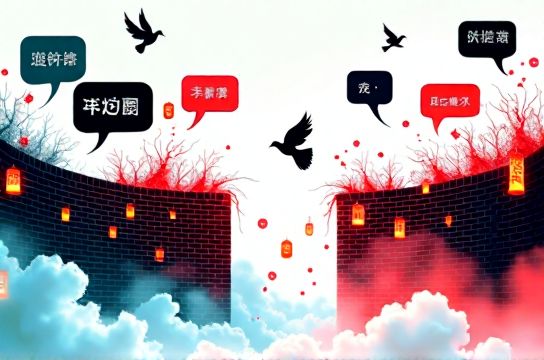
Imagine typing something totally innocent-looking—like 'grass-mud-horse'—only to find out it sounds exactly like a famous three-word curse in Mandarin when said aloud. That’s not a typo. It’s resistance. Over the years, Chinese internet users have mastered the art of homophonic wordplay, using puns, memes, and absurd imagery to talk about politics, scandals, and social issues without triggering the censors.
Take 'River Crab,' for example. Sounds harmless, right? But in Chinese, it’s a play on the word 'harmony'—a sarcastic nod to the government’s push for 'internet harmony,' which often means silencing dissent. Saying 'the river crab came again' isn’t about seafood; it’s code for 'censorship just struck.'
Then there’s 'Juren,' which means 'tall dude' but is actually short for 'jiu ren quan,' referencing a major political scandal. Or 'Zhou Qiang Ma,' which literally means 'horse strong week' but sounds suspiciously like a phrase mocking authority. These aren’t random phrases—they’re inside jokes with real bite.
Even emojis and images get weaponized. The photo of a yellow duck floating in a bathtub? Sometimes it’s just a duck. Other times, it’s a subtle reference to a protest symbol. A picture of a lion dancing might seem festive, but paired with the right caption, it could be roasting a public figure. The key? Plausible deniability. Nothing breaks the rules outright, but everyone who’s in the know gets the message.
Platforms like Weibo, WeChat, and even gaming chats have become linguistic playgrounds. New terms pop up overnight. Some go viral. Others get banned just as fast. But the cycle continues because the need to speak freely is stronger than any firewall.
And let’s be real—this isn’t just about rebellion. It’s about community. Using these coded expressions creates a sense of belonging. If you understand 'ant alien nation' (a satirical term for China), you’re part of the club. It’s language as both shield and signal.
Of course, the authorities aren’t asleep. They update filters constantly, hunting down new slang and banning trending topics. But creativity evolves faster than algorithms. Every time a word gets blocked, five new ones emerge.
So while the Great Firewall stands tall, it’s being quietly undermined by puns, sarcasm, and a whole lot of digital wit. The result? An underground lexicon that’s as hilarious as it is powerful.
In the end, this linguistic arms race shows one thing clearly: when people want to communicate, no amount of censorship can fully silence them. They’ll just speak in riddles, laugh in metaphors, and keep the conversation alive—one clever phrase at a time.