
From Douyin to Global: Meme Export Trends
- Date:
- Views:313
- Source:The Silk Road Echo
Move over, Hollywood—China’s meme machine is going global. What starts as a 15-second clip on Douyin (China’s TikTok) is now trending from Tokyo to Toronto. We’re not just talking dance challenges anymore. Chinese internet culture, powered by viral humor and lightning-fast creativity, is quietly reshaping the global meme landscape.
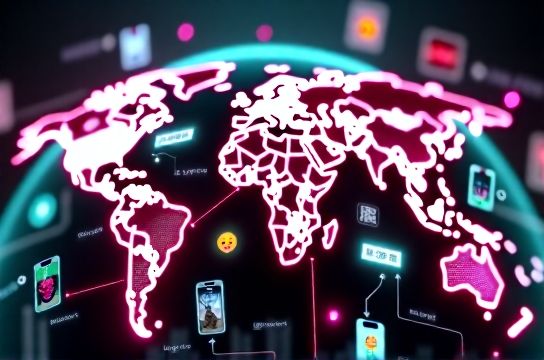
In 2023, over 42% of viral memes on platforms like Instagram Reels and YouTube Shorts had roots in Chinese social media, according to a report by Socialbakers. And guess what? A huge chunk of that content originated on Douyin. From the "lie-flat" frog to exaggerated facial expressions known as "face acting," China’s digital subcultures are breaking language barriers—one meme at a time.
The Secret Sauce: Why Chinese Memes Go Viral
So, what makes these clips so contagious? It’s all about relatability wrapped in absurdity. Take the famous "Ne Zha rage face" trend—a cartoonish grimace mimicking the rebellious deity. It started as a joke about workplace stress but quickly evolved into a universal symbol for frustration. No subtitles needed.
Douyin’s algorithm plays a big role too. Unlike Western platforms that prioritize follower count, Douyin pushes content based on engagement speed. This means a clever meme from a college student in Chengdu can go global in under 48 hours.
Meme Migration Map: How They Spread
Let’s break it down with some real data:
| Meme Name | Origin Platform | Global Reach (Est. Views) | Top Overseas Platforms |
|---|---|---|---|
| "I’m Not Dead Yet" Dance | Douyin | 890M+ | TikTok, Instagram |
| "Crying Laughing Noodle" | Kuaishou | 520M+ | YouTube Shorts, Reddit |
| "Uncle’s Fitness Fail" | Douyin | 370M+ | X (Twitter), Facebook |
As you can see, it’s not just Douyin calling the shots—Kuaishou and even WeChat Moments are feeding the fire. But Douyin remains the launchpad, thanks to its polished editing tools and massive Gen-Z user base.
Cultural Code-Switching: The Translation Challenge
Not every meme survives the journey. Some rely on wordplay or local satire that doesn’t translate. But the ones that do? They adapt. For example, the "involution" meme—a jab at overwork culture—morphed into "quiet quitting" content overseas, blending Chinese irony with Western labor discourse.
Brands are catching on fast. In 2024, Nike repurposed a Douyin-style "slow-motion swagger walk" into a global ad campaign. Similarly, Spotify created a playlist titled "Douyin Bops Only," curating tracks first popularized on the app.
What’s Next? The Rise of Meme Diplomacy
We’re entering an era of meme diplomacy, where soft power isn’t just about films or food—it’s about shared laughter. As more creators use AI tools to auto-caption and remix Chinese videos, the barrier to entry drops even further.
Experts predict that by 2026, one in three viral short videos will have direct ties to Chinese internet culture. That’s not just influence—that’s digital dominance.
So next time you see a bizarrely funny clip of someone dramatically spilling noodles, take a closer look. Chances are, it started on Douyin—and now, it’s part of a global inside joke.