
Explaining Chinese Buzzwords From Irony to Identity
- Date:
- Views:243
- Source:The Silk Road Echo
If you've scrolled through Chinese social media lately, you’ve probably stumbled upon phrases like 内卷 (nèijuǎn), 打工人 (dǎgōng rén), or 躺平 (tǎngpíng). These aren’t just trendy slang—they’re cultural snapshots of a generation navigating pressure, identity, and survival in modern China. Let’s decode the buzzwords that are shaping conversations from WeChat groups to dinner tables.
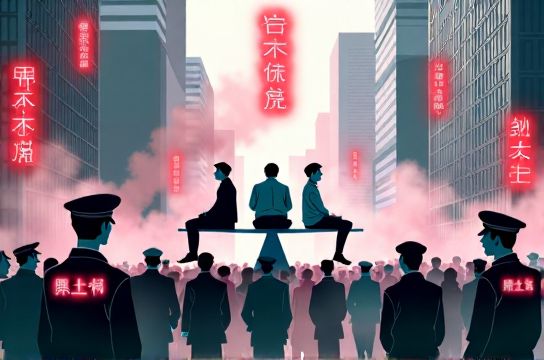
What Are Chinese Buzzwords?
Chinese internet slang evolves fast—driven by humor, satire, and societal shifts. Unlike dictionary terms, these expressions emerge from real-life struggles, often blending irony with raw emotion. They reflect everything from workplace burnout to digital escapism.
The Big Three: Nèijuǎn, Tǎngpíng, and Dǎgōng Rén
Three terms dominate 2024’s discourse: 内卷 (nèijuǎn), 躺平 (tǎngpíng), and 打工人 (dǎgōng rén). Think of them as stages in a psychological journey—from overwork to surrender to self-labeling.
- 内卷 (nèijuǎn) – Literally “involution,” it describes cutthroat competition where extra effort brings no real gain. Imagine studying 16 hours a day just to stay average.
- 躺平 (tǎngpíng) – “Lying flat.” A passive resistance to hustle culture. It’s not laziness—it’s opting out of the race.
- 打工人 (dǎgōng rén) – “Laborer person.” A self-deprecating term for office workers. It mocks corporate life while building solidarity.
Why These Words Matter
They’re more than memes. A 2023 survey by Peking University found that 68% of urban millennials identify with 臭打工 (chòu dǎgōng, “stinky worker”) as a daily mantra. Meanwhile, searches for 躺平 rose by 420% on Baidu between 2021 and 2023.
These terms reveal a quiet rebellion. As economic growth slows and job markets tighten, young Chinese are redefining success—not by promotions, but by mental peace.
Buzzword Breakdown: Usage & Meaning
| Buzzword | Literal Translation | Social Meaning | Popularity Index* |
|---|---|---|---|
| 内卷 (nèijuǎn) | Involution | Self-defeating overcompetition | 9.2/10 |
| 躺平 (tǎngpíng) | Lying flat | Rejecting societal pressure | 8.7/10 |
| 打工人 (dǎgōng rén) | Working stiff | Corporate drudgery with irony | 9.5/10 |
| 小镇做题家 | Small-town test-taker | Academic grind without mobility | 7.3/10 |
*Based on social media mentions and search volume (2023, CN Data Institute)
From Irony to Identity
What makes these words stick? They’re relatable, sharply ironic, and emotionally honest. Calling yourself a 打工人 isn’t defeat—it’s reclaiming dignity in a system that undervalues labor.
And while officials have criticized 躺平 as “pessimistic,” its staying power shows a deeper need: balance. As one Zhihu user wrote, “I’m not lazy. I’m just tired of running in place.”
Final Thoughts
Chinese buzzwords aren’t fading—they’re evolving. From nèijuǎn to tǎngpíng, they map a generation’s emotional GPS. Understanding them isn’t just about language; it’s about empathy.
So next time you hear 躺平, don’t dismiss it as apathy. Hear the exhaustion, the humor, and the quiet courage behind lying down—just to stand taller later.