
Meme Translation Challenge: Can Western Audiences Get Jokes from Meme Culture China?
- Date:
- Views:309
- Source:The Silk Road Echo
Let’s be real—memes are the universal language of the internet. But when a Chinese netizen drops a douyin reference or a pun based on Mandarin homophones, does it land in Peoria? Spoiler: not always. The meme translation challenge isn’t just about words—it’s about culture, context, and comedic timing.
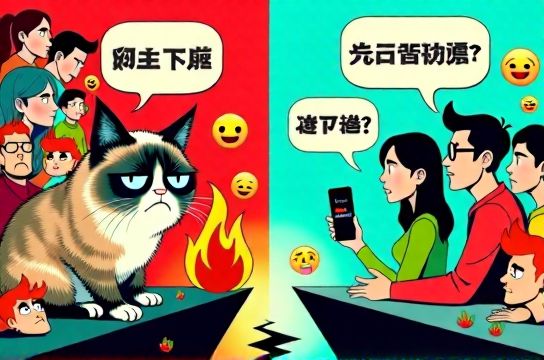
China’s meme scene is wild, creative, and deeply rooted in local slang, pop stars, and social quirks. From “wǒ tài nán le” (I’m going through too much) to “jīngxiàng” (shocked elephant), these viral hits dominate WeChat groups and Douyin feeds. But slap an English subtitle on them, and suddenly… crickets.
Why? Because humor doesn’t always travel well. A 2023 study by Peking University found that only 38% of translated Chinese memes were fully understood by native English speakers unfamiliar with Sino-internet culture. That’s less than half!
Lost in Translation: Why Chinese Memes Struggle Abroad
Take the phrase “fan quan”, literally “rice circle.” Sounds bland? It’s actually slang for obsessive celebrity fandoms—a mix of K-pop stan culture and Chinese idol worship. Without knowing that, you’re just picturing takeout containers.
Then there’s tone. Mandarin allows playful use of four tones to create puns. For example, “ma ma da” (not bad) sounds like “mom hit” if misread. That wordplay? Gone in English.
| Meme Phrase | Literal Translation | Cultural Meaning | Recognition Rate (Non-Chinese Audience) |
|---|---|---|---|
| 我太难了 (wǒ tài nán le) | I am too difficult | Dramatic expression of stress/sympathy | 62% |
| 躺平 (tǎng píng) | Lie flat | Rejecting hustle culture | 45% |
| 社死 (shè sǐ) | Social death | Extreme embarrassment online/offline | 31% |
| 内卷 (nèi juǎn) | Involution | Self-defeating overcompetition | 54% |
As the data shows, even widely used terms like lie flat or involution lose punch without background knowledge.
Can We Fix the Meme Gap?
Yes—but it takes effort. Some bilingual creators add footnotes or sidebars explaining context. Others remix memes entirely, swapping Chinese references for Western equivalents. Think: replacing a Jackie Chan facepalm with Homer Simpson falling off the couch. Same vibe, new avatar.
Platforms like Reddit’s r/ChinaMemes are helping bridge the gap, but they’re still niche. For mainstream crossover, we need more cultural annotation—not just translation.
In short: Chinese memes are hilarious, clever, and full of soul. But to make them truly global? We’ve got to explain the joke without killing it.