
The Rise of 'Involution' (Neijuan): Decoding a Viral Buzzword in Chinese Work Culture
- Date:
- Views:322
- Source:The Silk Road Echo
You’ve probably heard the term *hustle culture*—wake up at 5 a.m., grind 16 hours, drink coffee like water, and sleep when you’re dead. Now, imagine that… but with more people running in place, going nowhere fast. That’s *neijuan*, or 'involution,' the viral buzzword sweeping through China’s workplaces, campuses, and social media feeds.
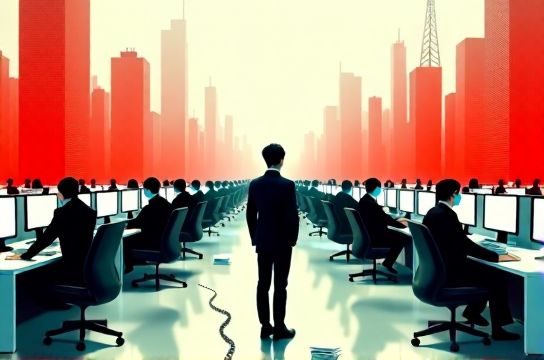
So what exactly is neijuan? Think of it as over-competition on steroids. It’s when everyone works harder, longer, and smarter—but no one actually gets ahead. Picture a classroom where every student stays up all night studying just to outdo each other, not to learn, but to beat the curve. Or an office where employees stay late *not* because they have work, but because leaving early looks bad—even if the boss is gone.
The word *involution* isn’t new—it’s borrowed from anthropology, where it once described societies that become more complex without progressing. But in today’s China, it’s been rebooted as a sarcastic, almost tragic meme for the burnout generation. Young professionals, students, and even gig workers use it to describe a system where effort doesn’t equal reward. You can run faster, but the treadmill just speeds up.
Why has neijuan gone viral? Blame sky-high expectations, shrinking opportunities, and a job market flooded with overqualified grads. In cities like Beijing and Shanghai, landing a stable job at a tech giant used to mean success. Now? Thousands apply for the same role, writing perfect resumes, acing interviews, and still getting ghosted. So what do they do? Study more. Network harder. Pretend to love加班 (jiānbān), aka overtime, because saying no could cost you your shot.
And it’s not just white-collar workers. Teachers complain about neijuan when they’re forced to teach to rigid standards instead of inspiring students. Parents feel it when they spend thousands on after-school tutors just so their kid can keep up. Even delivery riders get caught in the loop—racing against algorithms that demand faster drops, thinner margins, and zero mistakes.
What makes neijuan so relatable—and so depressing—is that everyone sees the trap, but no one knows how to escape. Quitting feels like losing. Slowing down feels risky. Speaking up? Often career suicide. So instead, people joke about it online, sharing memes like 'I’m not lazy—I’m strategically de-evolving' or 'My productivity peak was 2019. Now I’m just surviving.' Dark humor becomes coping.
But here’s the twist: talking about neijuan might be the first step toward change. By naming the problem, young Chinese are pushing back—not with protests, but with irony, satire, and shared exhaustion. Some companies are even responding, promoting 'anti-neijuan' policies like no-meeting Fridays or mandatory time off. Is it enough? Probably not. But it’s a start.
At its core, neijuan isn’t just about work. It’s about value. What does success really mean? Is it promotions and paychecks—or balance, creativity, and sanity? As more people question the grind, the conversation is shifting from 'How hard can I work?' to 'Why am I working this hard?'
So next time you hear 'neijuan,' don’t just laugh it off. It’s more than a trend—it’s a cry for meaning in a world that rewards motion over progress. And honestly? The whole planet might be a little guilty of it.