
Nanchang vs Hefei Revolution History Versus Emerging Tech Scenes in Central City Pair
- Date:
- Views:284
- Source:The Silk Road Echo
Let’s cut through the noise: Nanchang and Hefei aren’t just two provincial capitals in central China—they’re living textbooks of China’s dual-track evolution: one rooted in revolutionary legacy, the other accelerating on AI chips and quantum labs.
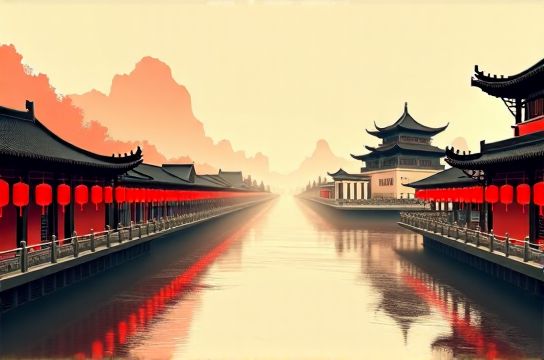
Nanchang, birthplace of the People’s Liberation Army (August 1, 1927), still wears its red heritage proudly—over 420 protected revolutionary sites, including the August 1 Uprising Memorial Hall, which drew 2.8 million visitors in 2023 (Jiangxi Provincial Culture & Tourism Bureau). Meanwhile, Hefei has quietly become China’s ‘Quantum Valley’: home to the world’s first quantum satellite (Micius), 3 national labs, and over 1,200 high-tech firms—contributing 38.6% of the city’s GDP in 2023 (Hefei Municipal Statistics Bureau).
Here’s how they compare head-to-head:
| Dimension | Nanchang | Hefei |
|---|---|---|
| GDP (2023) | ¥750.3B RMB | ¥1.27T RMB |
| Tech R&D Intensity | 2.1% of GDP | 3.7% of GDP |
| Key Industries | Aerospace (AVIC), green energy, cultural tourism | Quantum computing, AI chips (e.g., Enflame), display tech (BOE) |
| Top University | Nanchang University (Double First-Class) | USTC (ranked #1 in physics globally, QS 2024) |
What’s often missed? Synergy—not rivalry. Nanchang’s strong aerospace manufacturing base now supplies precision components to Hefei’s quantum sensor startups. And Hefei’s innovation policy lab is piloting digital red tourism platforms—using AR to animate Nanchang’s historic uprising sites.
So if you’re evaluating talent pipelines, supply chain resilience, or regional innovation ecosystems, don’t pit them against each other. Instead, ask: *How can their complementary strengths accelerate your next project?* For deeper insights into integrated central China strategy, explore our full analysis here.
Bottom line: History gives Nanchang moral authority; science gives Hefei strategic velocity. Together? They’re redefining what a ‘central city’ means in 21st-century China.