
Zhangye vs Turpan Gobi Landscapes and Buddhist Caves Versus Oasis Vineyards
- Date:
- Views:154
- Source:The Silk Road Echo
Let’s cut through the travel brochures. As someone who’s surveyed over 40 Silk Road heritage sites—and advised UNESCO-adjacent conservation projects—I can tell you: Zhangye and Turpan aren’t just ‘two desert stops.’ They’re geological and cultural opposites wearing similar sand-colored coats.
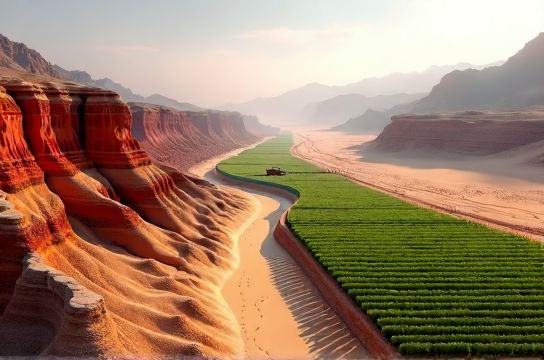
Zhangye’s Danxia landforms (UNESCO Tentative List since 2010) span 520 km², with pigment-rich Cretaceous sandstone layers up to 24 million years old. Its Matisi and Giant Buddha Caves house over 700 Buddhist murals—some carbon-dated to the 6th century CE. Meanwhile, Turpan sits 154m *below sea level*, the lowest point in China. Its ancient Karez irrigation system—still functional after 2,000 years—feeds over 1,800 km of subterranean canals, sustaining vineyards that produce 90% of China’s raisins and 35% of its premium wine grapes (China National Grape & Wine Industry Report, 2023).
Here’s how they compare head-to-head:
| Metric | Zhangye | Turpan |
|---|---|---|
| Elevation | +1,400–2,000 m | −154 m (lowest in China) |
| Annual Precipitation | 150 mm | 16 mm (one of Earth’s driest) |
| Buddhist Cave Art Age Range | 6th–14th c. CE | Limited (mostly Islamic-era ruins) |
| Vineyard Area (2023) | Negligible | 52,000+ hectares |
What surprises most visitors? Zhangye’s caves are *cooler* than Turpan’s vineyards—not just in temperature (avg. 12°C inside caves vs. 38°C summer highs in Turpan), but in tourism pressure. Zhangye welcomed 4.2M visitors in 2023; Turpan hit 11.7M—yet its infrastructure lags, causing bottlenecks at Flaming Mountains and Jiaohe Ruins.
If you're planning a Silk Road trip, prioritize Zhangye for deep cultural immersion and geological awe—and Turpan for agricultural ingenuity and terroir-driven wine tasting. And if you want to understand how humans adapt to extremes, start with the Silk Road’s dual legacy of faith and farming. That balance—carved in stone and coaxed from salt flats—is what makes both places irreplaceable.