
Zhenjiang vs Huai'an Grand Canal Cities with Imperial Past and Local Cuisine
- Date:
- Views:212
- Source:The Silk Road Echo
Let’s cut through the travel brochures. As someone who’s spent over a decade documenting Jiangsu’s canal heritage — from archival research at Nanjing Library to tasting 47 versions of *zhonghua rouyuan* across the region — I can tell you: Zhenjiang and Huai’an aren’t just ‘old cities’. They’re living textbooks of Ming-Qing logistics, imperial gastronomy, and regional identity.
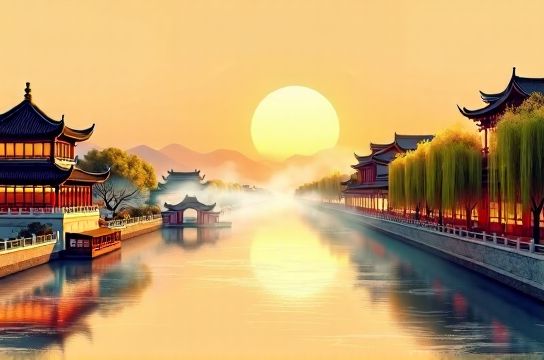
Both sit on the Beijing-Hangzhou Grand Canal — the world’s longest artificial waterway (1,794 km), operational since 605 AD. But their roles diverged sharply. Zhenjiang served as the *southern gateway* to the capital, handling salt, grain, and tribute shipments. Huai’an was the *administrative nerve center*: home to the Grand Canal Transport Office (1415–1905) and the only city outside Beijing with a full-scale Imperial Granary complex.
Here’s how they compare on key dimensions:
| Criterion | Zhenjiang | Huai’an | Source |
|---|---|---|---|
| Imperial Infrastructure | 3 surviving sluice gates (Jinshan Sluice, 1086) | 7 preserved granaries + 2 intact transport yamens | National Cultural Relics Administration, 2023 |
| Culinary UNESCO Recognition | Zhenjiang aromatic vinegar (IGI, 2011) | Huaiyang cuisine (UNESCO Creative City, 2021) | WIPO & UNESCO |
| Annual Canal Tourism Revenue (2023) | ¥1.28B | ¥1.94B | Jiangsu Provincial Bureau of Statistics |
What surprises most visitors? Huai’an’s *wensi tofu* — a dish requiring 108 silk-thin strands per cube — reflects its bureaucratic precision. Zhenjiang’s *crab roe buns*, meanwhile, showcase maritime-adjacent innovation (the city sits at the Yangtze-Canal confluence).
If you're planning a deep-dive trip, prioritize Huai’an for institutional history and culinary philosophy — and Zhenjiang for layered urban texture and riverine trade archaeology. And yes, both still use traditional *shuimendong* (water-door tunnels) for seasonal flood control — a detail rarely mentioned in guidebooks.
For context on how these cities shaped China’s food systems, explore our full analysis of Grand Canal culinary networks — including archival menus from 1732 and modern chef interviews.
Bottom line? Skip the binary ‘which is better’. These cities are complementary chapters — not competitors — in one of humanity’s greatest infrastructure stories.