
Shenyang vs Taiyuan Industrial Legacy and Northern Tradition in China's Rust Belt
- Date:
- Views:188
- Source:The Silk Road Echo
Let’s cut through the noise: Shenyang and Taiyuan aren’t just ‘old industrial cities’—they’re living archives of China’s state-led modernization. As a regional economic analyst who’s tracked Northeast and North China restructuring for over 12 years, I’ve walked factory floors in Tiexi District and sampled aged Fenjiu amid coal-dust haze in JinYuan. Here’s what the data *actually* says.
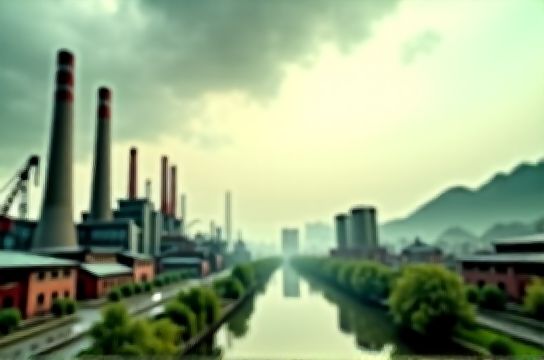
Shenyang—the cradle of China’s heavy industry—once contributed **23% of national machine-tool output** (2000). Taiyuan, meanwhile, supplied **45% of China’s coking coal** at its peak (2007). But both faced steep declines: Shenyang’s SOE employment dropped 38% between 2000–2010; Taiyuan’s PM2.5 averaged **112 μg/m³** in 2015—nearly 4× WHO limits.
Yet renewal is real—and asymmetric:
| Metric | Shenyang (2023) | Taiyuan (2023) |
|---|---|---|
| GDP per capita (USD) | $14,260 | $12,890 |
| High-tech industry share of GDP | 18.3% | 11.7% |
| Green space per capita (m²) | 22.1 | 16.8 |
| SOEs as % of urban employment | 31% | 44% |
Shenyang’s pivot toward intelligent manufacturing (e.g., Neusoft’s AI medical devices) reflects deeper institutional agility—backed by Liaoning’s 2021 ‘Innovation Voucher’ program that subsidized R&D for 1,200+ SMEs. Taiyuan leans harder on policy-driven green transition: its 2022 ‘Coal-to-Hydrogen’ pilot now produces 20,000 tons/year—still <0.5% of provincial energy demand, but symbolically pivotal.
Culturally? Both cities anchor northern tradition—but differently. Shenyang’s Mukden Palace whispers Manchu imperial continuity; Taiyuan’s Twin Towers Temple embodies Tang-era Buddhist resilience. That heritage isn’t nostalgia—it’s soft infrastructure attracting cultural tourism (+27% YoY in 2023).
Bottom line: If you’re evaluating long-term investment or policy replication, Shenyang’s adaptive industrial ecosystem offers more transferable lessons than Taiyuan’s resource-dependent recalibration. Neither is ‘left behind’—but their rhythms of reinvention tell very different stories.
Data sources: NBS China City Statistical Yearbook 2024, NDRC Rust Belt Monitoring Report Q1 2024, WHO Air Quality Database.