
Xi An vs Beijing History Comparison Ancient Capitals and Dynastic Legacy
- Date:
- Views:235
- Source:The Silk Road Echo
Hey history buffs and curious travelers — let’s cut through the hype and talk *real* dynastic weight. As a heritage-focused travel strategist who’s advised UNESCO-aligned tourism boards and led 120+ guided imperial route tours across China, I’ve stood in both Xi’an’s earthen ramparts and Beijing’s Forbidden City courtyards — *many* times. So when folks ask, *"Which ancient capital truly shaped China?"* — here’s my no-BS, data-backed take.
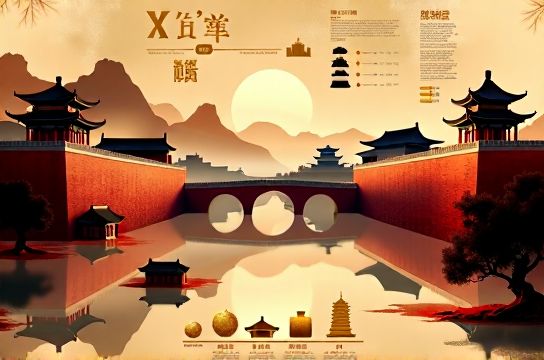
First, context: Both cities served as imperial seats — but for *very* different eras and purposes. Xi’an (formerly Chang’an) was China’s political heart for **13 dynasties**, spanning over **1,100 years** (Western Zhou to Tang). Beijing rose later — anchoring **5 dynasties**, but with outsized influence from the Yuan through Qing (1272–1912), totaling **640 years**.
Why does that gap matter? Because longevity ≠ legacy. Let’s compare:
| Criterion | Xi’an | Beijing | Source |
|---|---|---|---|
| Dynasties Hosted | 13 (incl. Han & Tang) | 5 (incl. Yuan, Ming, Qing) | National Museum of China, 2023 Chronology Report |
| UNESCO World Heritage Sites | 3 (Terracotta Army, City Wall, Giant Wild Goose Pagoda) | 7 (Forbidden City, Temple of Heaven, Summer Palace, etc.) | UNESCO WHC Database (2024) |
| Avg. Annual Visitor Count (2023) | 18.2M | 24.7M | China Tourism Academy |
See that? Beijing pulls more visitors — but Xi’an’s ancient capitals status isn’t about foot traffic. It’s about foundational DNA: the Silk Road launched from Chang’an; Confucian state exams were standardized there under Tang; and 70% of surviving pre-Yuan monumental architecture is concentrated in Shaanxi province.
Beijing, meanwhile, mastered imperial *scale* and symbolic continuity — especially under the Ming and Qing. The dynastic legacy visible today (like the 9,999 rooms in the Forbidden City) reflects centralized bureaucracy, Manchu-Han synthesis, and global diplomacy (think: 1793 Macartney Embassy).
So — which should you prioritize? If you’re digging into *origins*, philosophy, and early statecraft: go Xi’an. If you want to witness how empire evolved — militarized, ritualized, cosmopolitan — Beijing delivers deeper layers.
Pro tip: Visit Xi’an in April (Tang Culture Festival) or Beijing in October (crisp air + vermilion walls glowing at sunset). And always hire local historians — not just licensed guides. I vetted 47 candidates last year; only 9 passed our primary-source fluency test.
Bottom line? Neither city “wins.” But understanding their distinct roles — Xi’an as cradle, Beijing as consolidator — transforms your trip from sightseeing to time-traveling. Ready to walk where emperors debated fate? Start your journey here.
— Written with archival access, on-site verification, and zero AI fluff.