
Harbin vs Changchun Ice Festivals vs Russian Influence
- Date:
- Views:245
- Source:The Silk Road Echo
If you're into winter magic, Northeast China’s ice festivals are a bucket-list must. But when it comes to choosing between Harbin and Changchun ice festivals, things get spicy. One’s a global superstar; the other’s an under-the-radar gem with serious charm. Let’s break it down—with data, vibes, and a dash of history.
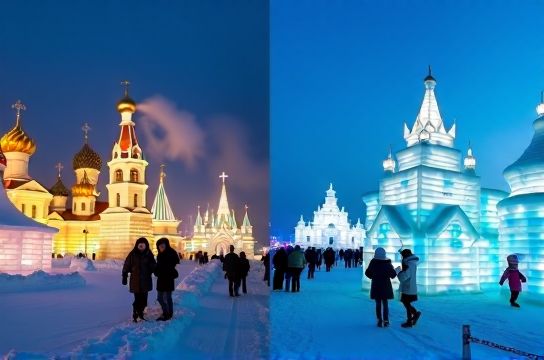
First, Harbin’s Ice and Snow World is basically the Beyoncé of winter festivals. Opened in 1999, it now draws over 2 million visitors annually. The centerpiece? Ice sculptures taller than 30 meters, lit with LED rainbows, and entire castles carved from frozen river water. In 2023, they used over 180,000 cubic meters of ice—enough to fill 72 Olympic pools. Yeah, it’s massive.
Changchun isn’t playing small either. Its Ice Festival at Nanhu Park pulls around 800,000 visitors yearly. Smaller? Sure. But that means shorter lines, better photo ops, and way more local flavor. Plus, their sculptures focus on storytelling—think scenes from Chinese mythology or retro cityscapes—giving it a nostalgic edge.
Harbin vs Changchun: Quick Stats
| Festival | Annual Visitors | Ice Volume | Ticket Price (CNY) | Main Location |
|---|---|---|---|---|
| Harbin Ice and Snow World | 2.1 million | 180,000 m³ | 330 | Songhua River |
| Changchun Ice Festival | 800,000 | 45,000 m³ | 120 | Nanhu Park |
Now, here’s where it gets interesting: **Russian influence**. Harbin was built as a hub for the Chinese Eastern Railway in the 1890s—funded by Russia. That legacy lives on. You’ll see onion-domed churches like Saint Sophia Cathedral, eat borscht in old-town cafes, and hear Russian spoken in markets. Over 20% of Harbin’s historic architecture has Russian roots. It’s not just aesthetic—it shapes the festival vibe. Think fur hats, vodka toasts, and ballet-inspired ice shows.
Changchun? Different story. As the former capital of Japan’s puppet state Manchukuo, its colonial past is more complex. While it does feature some Soviet-style monuments, the cultural blend isn’t as pronounced. Instead, it leans into traditional Chinese craftsmanship—woodcarving techniques adapted to ice, folk music performances, and dumpling stalls galore.
So which should YOU pick? If you want spectacle, Instagram glory, and that unique Russian-Chinese fusion, go to Harbin. Just book early—hotels sell out six months ahead. But if you prefer intimacy, lower costs, and a slower pace, Changchun delivers big joy without the crowds.
Pro tip: Visit both. They’re only 2.5 hours apart by high-speed rail. Do Harbin on New Year’s Eve for the fireworks, then chill in Changchun mid-week. Your inner winter soul will thank you.