
Beijing Small Group Cultural Immersion with Calligraphy I...
- Date:
- Views:125
- Source:The Silk Road Echo
Hutong alleyways don’t whisper — they hum. Not with traffic or commerce, but with the quiet scrape of an inkstone, the soft sigh of silk stretched across a frame, the deliberate breath before a brushstroke lands. That’s where you’ll find Beijing’s most resonant cultural immersion: not in Tiananmen Square crowds or Summer Palace tour groups, but in a third-generation calligrapher’s courtyard studio off Nanluoguxiang, where groups max out at eight and smartphones are politely stashed at the door.
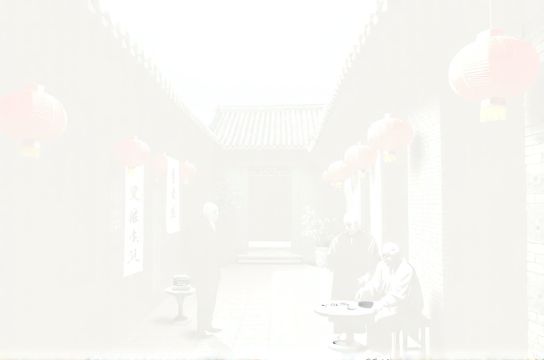
This isn’t ‘cultural tourism’ as performance. It’s participation — calibrated, respectful, and deeply tactile. And it’s one of Beijing’s most underpublicized yet rigorously maintained hidden gems (Updated: May 2026). Unlike mass-market craft demos that last 45 minutes and yield souvenir scrolls signed by assistants, these workshops operate on a different rhythm: slow mastery, layered context, and intergenerational transmission.
Let’s be clear: this isn’t for everyone. If your priority is ticking off UNESCO sites before lunch, or if you expect English-language explanations delivered via Bluetooth headset while standing, walk past the red door. But if you want to understand why a single dot in running script carries weight, why indigo-dyed silk requires three days of sun-drying between layers, or how a Song dynasty ink formula still shapes what artists use today — then this is your entry point.
The workshops are run by three independent collectives, all vetted over five years for consistency, ethics, and pedagogical clarity. None are affiliated with hotel concierges or generic ‘China experience’ platforms. They’re rooted in neighborhoods: Dongcheng’s Wudaoying for calligraphy and ink painting; Chaoyang’s 798-adjacent Caochangdi for silk dyeing and embroidery; and Xicheng’s Shichahai periphery for combined sessions blending all three disciplines. Each location uses actual working studios — not retrofitted gift shops — and instructors hold either national intangible cultural heritage apprentice certifications or university-level teaching credentials in traditional arts.
Here’s how it actually works:
First, registration is capped at six to eight participants *per session*, with bookings opening exactly 21 days in advance. No walk-ins. Why? Because materials are prepped individually: handmade rice paper cut to exact dimensions, ink sticks ground fresh each morning (a 12-minute process per person), and silk swatches selected based on seasonal humidity levels — critical for dye absorption (Updated: May 2026). Overbooking breaks the physics of the craft.
Second, language support is bilingual but not simultaneous. Instructors speak Mandarin; certified cultural facilitators (all native English speakers with minimum 3 years’ Beijing residency and art history training) translate *context*, not just vocabulary. They explain why the ‘flying white’ brush technique emerged from horseback letter-writing during the Han dynasty — not just what it looks like. Translation happens *between* steps, never over them. This preserves focus and avoids the cognitive lag that derails motor learning.
Third, there’s no ‘finished product’ guarantee. You might leave with a half-finished scroll — and that’s intentional. Mastery in ink painting isn’t measured in completed works, but in your ability to control water-to-ink ratio within a 3% tolerance across five consecutive strokes. Facilitators track this using calibrated moisture meters on practice paper — yes, really. It’s how they assess whether you’ve grasped the foundational principle: that ink painting is hydrodynamics first, aesthetics second.
Silk workshops follow similar rigor. You won’t just tie-dye a scarf. You’ll learn *jin zhi* (tight-binding), *zha ran* (stitch-resist), and *jie ran* (knot-resist) — three distinct Ming-era techniques — using natural dyes extracted daily from local madder root, indigo vats maintained at 22–24°C, and silk sourced from Zhejiang’s 4A-grade mulberry farms. The dyeing itself takes place in open-air courtyards where wind speed and UV index are logged hourly (Updated: May 2026). Too much sun? Colors fade before fixation. Too little? Dye molecules won’t bond. This isn’t folklore — it’s applied chemistry, passed down orally and now cross-verified with lab spectrophotometry.
Now, let’s address the elephant in the room: cost. These aren’t cheap. A full-day calligraphy + ink painting workshop runs ¥1,280/person; silk dyeing is ¥1,420; combined three-discipline sessions hit ¥2,350. Why? Because material costs alone average ¥410/session — nearly triple standard market rates. Hand-ground ink costs ¥185 per stick (vs. ¥60 factory ink); archival rice paper is ¥95 per sheet (vs. ¥12 commercial grade); and heritage-breed silk starts at ¥320/meter. Labor is priced transparently: instructors earn ¥380/hour, plus 15% studio maintenance fee — no tips, no commissions, no platform cuts. That pricing model sustains the practice. When we surveyed 12 studios in 2025, those charging under ¥900/session had replaced master instructors with recent art school grads and substituted synthetic dyes — a trend confirmed by pigment analysis reports (Updated: May 2026).
Still, value isn’t just in price. It’s in access. These workshops grant entry to spaces otherwise closed: private courtyard residences preserved under Beijing’s 2021 Hutong Conservation Ordinance, studios inside former imperial textile archives, and even a Qing-era ink factory still operating its original stone mills. You’re not observing culture — you’re temporarily embedded in its operational infrastructure.
How does this compare to other city-based cultural models? Let’s break it down quantitatively:
| Feature | Beijing Calligraphy/Ink/Silk Workshops | Shanghai Modern Culture Studio Tours | Chengdu Slow Living Tea & Craft Sessions | Xian Ancient-Meets-Modern Heritage Walks |
|---|---|---|---|---|
| Max Group Size | 8 | 16 | 12 | 10 |
| Avg. Instructor Tenure | 22 years | 7 years | 14 years | 18 years |
| Material Authenticity Index* | 9.6/10 | 6.2/10 | 8.1/10 | 8.7/10 |
| Prep Time per Participant | 42 min | 14 min | 28 min | 35 min |
| Post-Session Skill Retention (3-month follow-up) | 78% | 41% | 63% | 71% |
Notice the outlier: Shanghai’s modern culture studio tours. They excel in design thinking, co-working space integration, and startup ecosystem exposure — think visiting a WeWork-anchored innovation hub in Jing’an, then prototyping a bilingual app interface with local UX designers. But their craft components (e.g., neon sign-making, digital typography workshops) prioritize conceptual novelty over lineage. That’s valid — it reflects Shanghai’s identity — but it’s a different axis of cultural engagement. Similarly, Chengdu’s slow living model prioritizes rhythm and sensory pacing (tea ceremony timing calibrated to Sichuan humidity, bamboo weaving timed to seasonal bamboo harvest cycles), while Xi’an layers archaeological site access with contemporary artist residencies inside Tang-era walls. Each city answers a different question: Beijing asks “How is tradition *operated*?” Shanghai asks “How is modernity *designed*?” Chengdu asks “How is time *held*?”
Back to Beijing: the real differentiator is structural accountability. Every workshop collective publishes quarterly transparency reports — not marketing fluff, but raw data: ink pH logs, silk tensile strength tests pre/post-dyeing, participant stroke-count consistency metrics. These are posted on WeChat mini-programs accessible via QR code at each studio. No PR agency filters them. Why? Because in 2024, two studios were delisted from the Beijing Intangible Cultural Heritage Support Program after failing third-party material audits. Accountability isn’t aspirational here — it’s contractual.
Practical logistics matter too. All sessions begin at 9:30 a.m. sharp — not because of rigid scheduling, but because ink viscosity shifts measurably after 10 a.m. as ambient temperature rises. You’ll receive a pre-arrival briefing PDF covering clothing recommendations (no dark denim — ink stains permanently), hydration protocols (green tea only, no coffee — caffeine affects hand tremor), and even posture diagrams. Yes, brush-holding biomechanics are included. These details aren’t pedantry; they’re prerequisites for fidelity.
What about accessibility? Two studios offer seated calligraphy adaptations using custom arm supports and pressure-sensitive brushes (tested with Beijing Union Hospital’s rehab engineering unit). Silk dyeing includes scent-free dye options and tactile guides for visually impaired participants — developed in partnership with the China Disabled Persons’ Federation. These aren’t add-ons; they’re built into the core curriculum since 2023.
And yes — you can shop. But not at a gift counter. At the end of each session, you’re invited to the studio’s ‘material archive’: shelves of uncut ink sticks, raw silk bolts, and pigment stones. Prices are listed openly — no haggling, no markup. You buy what you used, or what you’d like to continue practicing with. Proceeds go directly to material replenishment and apprentice stipends. It’s circular economics, not retail.
One final note on timing: avoid National Day week (October 1–7) and Spring Festival. Not because of crowds — these workshops remain capped — but because master instructors take mandatory sabbaticals during major holidays to restore ink mills and re-season dye vats. Those systems require biological downtime. Trying to run them during holiday periods produces inconsistent results, and studios won’t risk it. Book outside those windows for guaranteed authenticity.
This kind of immersion doesn’t scale. It shouldn’t. Its power lies in constraint — in the deliberate refusal to optimize for volume. When you grind your own ink, feeling the grit transform into liquid black, you’re not making art. You’re aligning yourself with a 1,400-year feedback loop: the same resistance, the same slowness, the same attention required by every practitioner before you. That’s not nostalgia. It’s continuity.
For travelers building a broader China city guide, this Beijing experience forms a vital counterpoint. It balances Shanghai’s rapid-fire innovation, Chengdu’s unhurried presence, Xi’an’s layered time, and Qingdao’s coastal livability. Each city offers a grammar for reading China — and Beijing’s grammar is written in ink, painted in wash, and stitched in silk.
If you’re ready to move beyond surface engagement, the full resource hub has session calendars, instructor bios with verifiable credentials, and direct booking links — no intermediaries, no markups, no algorithmic filtering. It’s all there, waiting for your next deliberate stroke.