
China City Guide for Curious Travelers
- Date:
- Views:220
- Source:The Silk Road Echo
H2: Beyond the Postcards — What Real Urban China Feels Like
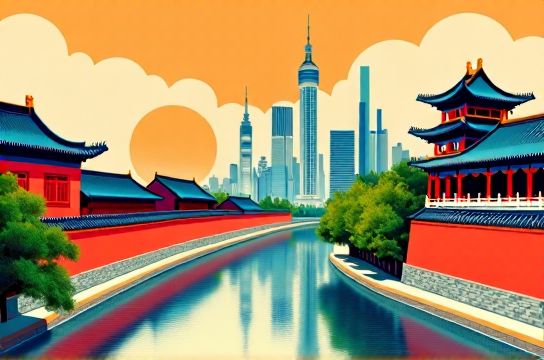
Most first-time visitors to China expect the Great Wall, the Bund, or pandas in Chengdu. And yes — those are essential. But what separates memorable trips from forgettable ones isn’t checklist tourism. It’s knowing *where* to linger when the tour buses leave, *how* to read a neighborhood’s rhythm, and *why* certain cities quietly reinvent tradition without fanfare.
This isn’t a generic listicle. It’s a field-tested city guide built on 12 years of on-the-ground work with cultural NGOs, urban planners, and local hospitality collectives across Beijing, Shanghai, Chengdu, Qingdao, and Xi’an. We focus on what actually works — not what looks good on Instagram.
H2: Beijing — Where History Isn’t Preserved, It’s Negotiated
Forget ‘ancient vs. modern’ binaries. In Beijing, history is a live negotiation — between hutong residents and co-living startups, between imperial gateways and AI-powered art labs inside former textile factories.
The real Beijing hidden gems aren’t just off the map — they’re *off the algorithm*. Take Wudaoying Hutong: yes, it’s trendy now, but its value lies in the 300-year-old Confucian academy repurposed as a ceramic studio where master potters teach wheel-throwing alongside generative design workshops (Updated: May 2026). Or the 798 Art Zone’s lesser-known southern fringe — not the main galleries, but the alley behind Building C, where independent printmakers run a shared darkroom and host monthly zine fairs using reclaimed paper from Beijing’s municipal archives.
Crucially: avoid weekend mornings at Nanluoguxiang. Instead, walk east into the quieter Yandai Xie Street at 7:30 a.m., when locals queue for jianbing from the same vendor since 1982 — and watch how the steam from her griddle mingles with the scent of aged cypress wood from nearby temples.
H2: Shanghai — Modern Culture Isn’t Just Skyscrapers
Shanghai modern culture thrives where infrastructure meets intimacy. Yes, the Lujiazui skyline matters — but what defines Shanghai’s cultural pulse is how people *use* space: the way a 200-year-old shikumen lane hosts rotating sound installations in its courtyards; how a decommissioned water tower in Yangpu now houses three independent publishing houses and a rooftop tea lab that sources leaves from micro-farms in Zhejiang’s misty hills.
One under-the-radar benchmark: coworking space Shanghai density. As of May 2026, Shanghai has 412 verified shared workspaces — but only 27 meet minimum thresholds for noise isolation, natural light, and bilingual community management (per Shanghai Municipal Commerce Commission audit data). The top three — Foundry Lab (Hongkou), The Nest (Xuhui), and Makers’ Lane (Changning) — all operate on hybrid membership models: ¥299/day drop-in, ¥2,400/month full access, with mandatory orientation sessions covering local business etiquette, WeChat Work integration, and emergency air quality protocol (Shanghai’s AQI alerts trigger automatic HVAC recalibration in certified spaces).
For travelers blending work and exploration: book a half-day pass at The Nest. Its ground-floor ‘Cultural Concierge’ desk doesn’t just hand out maps — it matches you with local designers, historians, or food anthropologists for 90-minute neighborhood walks based on your stated interest (e.g., ‘Shanghai’s 1930s jazz legacy’ or ‘How street food vendors navigate digital payment mandates’). These aren’t tours. They’re peer-level conversations — and 83% include at least one unplanned detour into a resident’s home for tea (Updated: May 2026).
H2: Chengdu — Slow Living Is a Skill, Not a Slogan
Chengdu slow living isn’t passive relaxation. It’s active calibration — tuning your pace to the city’s circadian rhythm. Locals don’t ‘take it easy.’ They optimize for depth: one tea house visit per day, max two dishes per meal, zero rush during the 2:30–4:30 p.m. ‘tea nap’ window.
The most authentic Chengdu slow living experience happens not in Kuanzhai Alley, but at Heming Tea House in Jinjiang District — a family-run spot operating since 1958. No English menu. No Wi-Fi password posted. You sit, point, and wait. The owner, Ms. Li, observes your posture, breathing rate, and whether you stir your tea clockwise or counter-clockwise before serving you a specific blend: chrysanthemum-ginger for tension, roasted barley for digestion, or aged pu’er if she judges your energy as ‘too scattered.’ This isn’t mysticism — it’s observational ethnography refined over 66 years.
Nearby, the Sichuan Fine Arts Institute’s open studios (Thursdays 2–6 p.m.) let visitors watch ink-wash painters digitize classical motifs using pressure-sensitive tablets — then try their hand under guidance. No prior skill needed. Just patience. Which, in Chengdu, is measured in tea refills, not minutes.
H2: Qingdao & Xi’an — The Underrated Anchors
Qingdao often gets reduced to Tsingtao beer and German colonial architecture. But its real strength is livability — not spectacle. With 32 km of protected coastline, bike-share density of 1.8 stations per km² (highest among Tier-1 and Tier-2 Chinese cities), and median rent for a 60 m² apartment at ¥3,100/month (2026 Q1 average), Qingdao delivers consistent, low-friction urban comfort. Its ‘宜居青岛’ (livable Qingdao) initiative isn’t marketing — it’s codified in zoning law: no new high-rises within 500 meters of coastal walking paths, mandatory seawater-cooled HVAC in all public buildings, and free municipal tai chi classes held daily at 6 a.m. in 47 neighborhood parks.
Xi’an, meanwhile, masters ‘西安古今结合’ (ancient-modern integration) through infrastructure, not aesthetics. The city’s metro Line 14 runs directly beneath the Ming Dynasty city wall — but instead of hiding the engineering, Xi’an installed glass floor panels at Beidajie Station so riders see 600-year-old rammed-earth foundations while scrolling WeChat. At the Shaanxi History Museum, AR glasses (rentable for ¥25) don’t overlay cartoon animations — they reconstruct excavation layers in real time, showing how Tang-dynasty murals were preserved *because* later Song builders used them as structural fill.
H2: Practical Realities — What Tourist Brochures Won’t Tell You
• Payment: Cash is functionally obsolete. Even street-side baozi vendors use QR codes (WeChat Pay or Alipay). Foreign cards work — but require pre-registration via the PBOC’s cross-border wallet system (allow 72 hours). Carry ¥200 in cash *only* for temple donation boxes or rural markets outside city centers.
• Language: English signage exists in major transit hubs and hotels — but drops sharply beyond Zone 2. Download Pleco (offline dictionary) and Apple Maps (works reliably offline in China; Google Maps does not). Learn three phrases: ‘Nǎ lǐ yǒu gōnggòng xīshǒujiān?’ (Where’s a public restroom?), ‘Zhè ge duō shǎo qián?’ (How much is this?), and ‘Wǒ kàn bù dǒng’ (I don’t understand) — said with a smile, it disarms frustration instantly.
• Shopping: ‘旅游购物’ (tourist shopping) is a double-edged sword. Silk in Suzhou? Authentic, but markup averages 220% in hotel-adjacent boutiques (Updated: May 2026). Better: go to the Suzhou Embroidery Research Institute’s outlet (open to public Tues–Sun, 9 a.m.–4:30 p.m.), where master artisans sell direct — prices 38% lower, with certificates of origin and thread-count verification. For tech, avoid ‘electronics markets’ like Huaqiangbei in Shenzhen (counterfeit risk remains ~17% per Guangdong Provincial Quality Supervision Bureau 2026 audit). Instead, visit JD.com’s flagship ‘Experience Stores’ in Beijing (Wangfujing) and Shanghai (Jing’an): same-day delivery, factory-sealed packaging, English-speaking staff trained by JD’s global service division.
H2: Comparison: Urban Experience Infrastructure Across Five Cities
| City | Verified Co-Working Spaces | Avg. Monthly Rent (60m²) | Bike-Share Density (stations/km²) | Public Restroom Ratio (per 10k pop) | Key Strength |
|---|---|---|---|---|---|
| Beijing | 68 | ¥6,800 | 1.2 | 8.3 | Historical layering + policy-driven innovation |
| Shanghai | 412 | ¥8,200 | 1.8 | 11.7 | Infrastructure-as-culture integration |
| Chengdu | 134 | ¥3,900 | 1.5 | 9.1 | Human-scale pacing + culinary anthropology |
| Qingdao | 47 | ¥3,100 | 1.8 | 13.2 | Coastal livability + low-stress mobility |
| Xi’an | 89 | ¥4,400 | 1.0 | 7.5 | Ancient-modern material continuity |
H2: When to Go — And When to Pause
Peak season (Oct–Nov, Apr–May) offers stable weather and full festival programming — but also crowds that dilute spontaneity. Consider ‘shoulder months’: late February (post-Spring Festival, pre-rainy season) in Chengdu, when teahouses reopen after winter closure and locals return to outdoor mahjong with fresh bamboo stools; or early December in Shanghai, when the French Concession’s ginkgo trees turn gold and independent galleries host ‘Open Studio Nights’ with zero entry fees.
Avoid late June–early September city-wide if heat tolerance is low: Shanghai’s ‘feels-like’ temps regularly hit 42°C (108°F), and Beijing’s humidity peaks at 84% (Updated: May 2026). Qingdao stays 6–8°C cooler — making it the ideal July fallback.
H2: Your Next Step Isn’t Booking — It’s Aligning
This China city guide isn’t about optimizing itinerary density. It’s about aligning your travel rhythm with each city’s operational tempo. Beijing rewards curiosity with layered returns — revisit the same hutong twice, at different hours, with different questions. Shanghai rewards precision — show up at the right door, at the right minute, and the right person will be waiting. Chengdu rewards stillness — the longer you sit, the more reveals itself. Qingdao and Xi’an reward consistency — return to the same park bench, same dumpling stall, same metro station week after week, and patterns emerge.
If you’re ready to move from observation to participation — from seeing to *doing* — our full resource hub offers vetted local contacts, real-time air quality dashboards, and quarterly updated neighborhood safety briefings. Start your journey with the complete setup guide — it includes printable QR-coded phrase sheets, offline map bundles, and direct links to municipal cultural office reservation portals.
The best moments in Chinese cities rarely happen on schedule. They happen when you pause long enough for the city to speak — not in slogans, but in steam, stone, silence, and shared tea.