
China City Guide: Why Xi’an is the Heartbeat of Chinese Civilization
- Date:
- Views:199
- Source:The Silk Road Echo
If you're dreaming of ancient wonders, warrior statues standing in perfect formation, and streets bursting with sizzling street food—welcome to Xi'an, the city where Chinese civilization truly began. This isn't just another stop on your China itinerary; it's the soul of the Middle Kingdom.
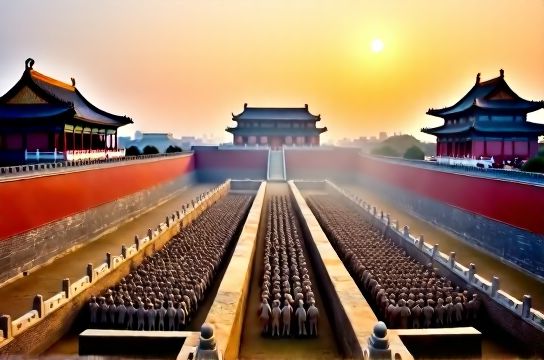
The Cradle of Chinese History
Sure, Beijing has the Forbidden City, and Shanghai dazzles with skyscrapers—but Xi'an (formerly Chang'an) was China’s capital for over 13 dynasties. It served as the eastern terminus of the Silk Road, making it a melting pot of culture, trade, and ideas long before globalization became a buzzword.
And let’s talk numbers: Xi'an is home to over 3,000 years of history. That’s older than Rome’s glory days. The city boasts more than 300 historical sites, including the jaw-dropping Terracotta Army—a must-see that pulls in over 7 million visitors annually.
The Star Attraction: Terracotta Warriors
No trip to Xi'an is complete without visiting Emperor Qin Shi Huang’s underground army. Discovered in 1974 by farmers digging a well, this archaeological marvel features over 8,000 life-sized soldiers, 670 horses, and 130 chariots—all buried to protect the first emperor in the afterlife.
Here’s a quick snapshot of what you’ll see:
| Statue Type | Estimated Count | Height (cm) | Unique Features |
|---|---|---|---|
| Warriors | 8,000+ | 180–195 | Individual facial features, armor styles |
| Horses | 670 | 150–170 | Realistic musculature, dynamic poses |
| Chariots | 130 | Variable | Bronze construction, intricate details |
Cool fact? No two warriors have the same face. Experts believe they were modeled after real soldiers—making this one of the most personal tributes to power ever built.
Xi'an Beyond the Warriors
Don’t get tunnel vision—Xi'an offers way more than clay soldiers. Wander through the City Wall, one of China’s best-preserved fortifications, or bike ride its 14-kilometer perimeter for epic sunset views.
Then dive into the Muslim Quarter, where the scent of cumin and chili fills the air. Try roujiamo (Chinese hamburger), yangrou paomo (crumbled flatbread in lamb stew), and jianbing (savory crepes)—all under $2 per dish!
Practical Tips for Travelers
- Best Time to Visit: Spring (March–May) and Autumn (September–October)
- Average Daily Cost: $40–60 (budget-friendly!)
- Language Tip: Learn “Xièxie” (thank you) and “Duōshǎo qián?” (How much?)
In short, Xi'an isn’t just a city—it’s a time machine. Whether you’re a history geek, food lover, or curious traveler, this ancient capital delivers like no other.