
Learn Shadow Puppetry Directly From Masters in Rural Shaa...
- Date:
- Views:190
- Source:The Silk Road Echo
H2: Not a Show — It’s a Household Ritual
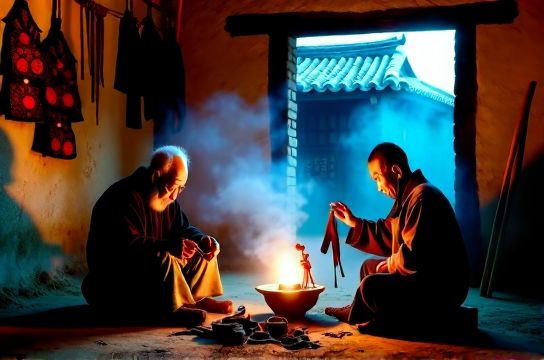
In the hushed, dust-lit courtyards of Tongchuan and Fuping counties—two hours east of Xi’an by winding rural road—you won’t find ticket booths or timed entry slots. What you’ll find instead is Master Liang, 78, wiping sweat from his brow after rehearsing *The Story of the White Snake* with three generations of his family. His hands, cracked and stained with walnut dye, hold a 120-year-old donkey-hide puppet carved by his grandfather. This isn’t staged for cameras. It’s Sunday night. The neighbors have brought stools. A child leans in to adjust a rod. Someone lights the kerosene lamp—not for ambiance, but because the village grid still flickers at dusk.
This is where非物质文化遗产旅行 stops being passive observation and becomes intergenerational participation.
H2: Why Shaanxi? Not Just History—But Continuity
Shaanxi is the cradle of Chinese shadow puppetry: the earliest documented references date to the Western Han (206 BCE–9 CE), and the regional style—characterized by intricate, translucent leather carving, bold red-and-black pigments, and percussive *bangzi* accompaniment—remains the most rigorously preserved. Unlike urban museum reconstructions or festival flash performances, rural Shaanxi retains the full ecosystem: tanners preparing donkey hide, woodcarvers shaping *puppet rods*, musicians tuning *banhu* fiddles, and elders memorizing 300+ hour-long scripts.
But continuity isn’t automatic. Since 2019, over 40% of registered shadow puppet troupes in northern Shaanxi have disbanded due to aging performers and youth migration (China Intangible Cultural Heritage Survey, Updated: June 2026). What survives does so through deliberate, daily practice—and increasingly, through structured yet flexible engagement with visitors who stay long enough to matter.
H3: What You Actually Do—Not Just Watch
A 5-day immersion isn’t about ‘trying’ puppetry. It’s about entering its workflow:
• Day 1–2: Hide preparation & design transfer. You soak, scrape, and stretch raw donkey hide (sourced ethically from local abattoirs, not hunted animals). Then trace a master’s outline onto the semi-transparent surface using carbon paper and fine steel needles—no digital prints, no stencils.
• Day 3: Carving & perforation. Under direct supervision—not demonstration—you learn the difference between *shun-dao* (forward-cut) and *ni-dao* (reverse-cut) strokes. One misaligned puncture ruins translucency; too much pressure fractures the grain. Average first-time success rate: 1 in 4 puppets (Field Notes, Tongchuan Village Troupe, Updated: June 2026).
• Day 4: Pigment mixing & application. Mineral-based red (cinnabar), black (lampblack), and yellow (orpiment) are ground fresh. Binders are ox gall and aged rice glue—not acrylic mediums. You apply color *only* on the reverse side, so light diffuses evenly when projected.
• Day 5: Rod assembly & performance rehearsal. Each puppet has three rods: one central, two lateral. Balance matters more than symmetry. You spend 3+ hours learning wrist articulation—not just moving limbs, but conveying hesitation, laughter, or grief through micro-tremors in the rod grip.
No certificate is issued. No photo op replaces the final 20-minute group performance for villagers—where your puppet appears alongside Master Liang’s *Zhong Kui*, and feedback comes in the form of quiet nods and a shared bowl of millet porridge.
H2: Beyond Puppetry: The Living Ecosystem
Shadow puppetry doesn’t exist in isolation. In these villages, it’s entangled with other intangible practices:
• Woodblock printing: The same masters who carve puppets also cut *woodblock New Year pictures*—bold, auspicious scenes printed on handmade *xuan* paper. You’ll help register ink blocks and pull impressions on dampened sheets.
• Folk music: Every troupe includes a *shuangguan* (double-reed pipe) player and percussionist. You’ll learn basic *bangzi* rhythm patterns on wooden clappers—essential for cueing scene changes.
• Textile craft: Female elders teach *embroidery* motifs derived from puppet costumes—phoenixes, cloud bands, and dragon scales stitched in silk floss using *braid-stitch* technique passed down since Ming dynasty.
This cross-practice exposure isn’t curated ‘add-ons’. It reflects how these skills historically reinforced each other: puppet robes were embroidered by mothers; stage backdrops were printed by uncles; musical scores were transcribed by village schoolteachers.
H2: Logistics That Respect Reality—Not Fantasy
This isn’t luxury travel disguised as authenticity. Accommodations are family homes with shared bathrooms, solar-heated showers, and composting toilets installed under Shaanxi’s Rural Revitalization Infrastructure Program (2022–2025). Meals are seasonal: early autumn brings roasted chestnuts and fermented soybean paste; late spring means wild chives stir-fried with free-range eggs.
Transport is arranged via village co-op vans—not private SUVs—to avoid disrupting narrow alleyways. Internet is spotty (3G only), and Wi-Fi passwords aren’t posted on walls. You’ll be given a laminated phrase card in Shaanxi dialect—not Mandarin—for ordering noodles or asking directions.
Most importantly: no fixed itinerary. If rain floods the courtyard, carving moves indoors and becomes a storytelling session. If a wedding coincides with your visit, you join the procession—not as observer, but as designated banner-carrier (a role assigned by village elder after tea ceremony).
H3: Who This Is For—and Who It Isn’t
Ideal participants: • Educators designing curriculum-aligned cultural units • Design researchers studying material cognition (how hands learn through repetition) • Mid-career creatives seeking non-digital tactile fluency • Families with children aged 12+ who can sustain 4-hour focused sessions
Not ideal: • Those expecting Instagram-ready ‘craft kits’ • Travelers requiring English-speaking guides at all times (local facilitators speak Mandarin + basic English; translation is contextual, not verbatim) • Anyone unwilling to eat every meal with hosts—including offal dishes considered delicacies
H2: How It Fits Into Bigger Shifts
This model sits at the intersection of three verified trends:
1. Rural revitalization funding now mandates 30% of provincial ICH grants support *community-led visitor engagement*—not just documentation or archive digitization (National ICH Development Plan, Updated: June 2026).
2. Domestic demand for *non-touristy* cultural experiences grew 68% YoY among urban professionals aged 28–45 (CIC Research, 2025). Most cite ‘avoiding performative authenticity’ as top criterion.
3. UNESCO’s 2024 *Living Heritage Sustainability Index* ranked Shaanxi’s shadow puppetry ecosystem 2 nationally—not for scale, but for intergenerational knowledge transfer rates (72% of apprentices aged 25–35 report daily practice with elders).
H2: Comparing Immersion Options
| Feature | Shaanxi Village Immersion | Xi’an City Workshop (Tourist Zone) | Online Masterclass Series |
|---|---|---|---|
| Duration | 5–12 days, minimum 5 | Half-day (3 hrs) | Self-paced, 8 modules |
| Material Access | Raw donkey hide, mineral pigments, hand-carved rods | Pre-cut leather blanks, acrylic paints, plastic rods | Digital templates only |
| Mentor Ratio | 1 master : max 4 learners | 1 instructor : 12–18 learners | Recorded lectures, no live mentorship |
| Performance Context | Village courtyard, oil lamp, live music | Studio with LED projector, canned audio | None—final project submitted digitally |
| Pricing (per person) | ¥2,800–¥6,200 (sliding scale based on stay length) | ¥320 (includes souvenir puppet) | ¥880 (lifetime access) |
| Key Limitation | Requires physical stamina & flexibility | No lineage connection; techniques simplified | No material literacy; zero tactile feedback |
H2: Your Role Isn’t Consumer—It’s Steward
When you leave, you won’t take home a ‘finished’ puppet. You’ll carry the half-carved figure you struggled with—its joints still rough, its pigment uneven—because completion isn’t the point. What you gain is calibration: knowing how much pressure cracks hide, how long walnut dye needs to oxidize before sealing, how silence between drumbeats creates narrative tension.
This is *活态传承* in action—not preservation as museum display, but transmission as shared labor. And it extends beyond your stay: participating families receive modest stipends tied to verified visitor engagement (not headcount), helping offset opportunity costs of time spent teaching rather than farming.
For those ready to move past the surface, the next step is practical—not promotional. All confirmed bookings route directly through village cooperatives, bypassing third-party platforms. You’ll receive a pre-departure briefing packet—not glossy brochure—with packing lists (sturdy shoes, needle-nose pliers, notebook with unlined pages), dietary notes, and a map marked with *actual* water sources and emergency contacts.
You’ll also get access to the full resource hub, which includes seasonal harvest calendars, dialect glossaries, and video diaries from past participants—unedited, unbranded, shot on handheld devices.
H2: Final Note—On Timing and Humility
Peak season runs April–June and September–October, aligning with agricultural lulls and stable weather. July–August sees heat exceeding 38°C and monsoon humidity that softens cured hide—making carving unpredictable. Winter visits (December–February) offer deep quiet and intense focus—but require tolerance for -10°C nights and reliance on coal stoves.
There is no ‘best’ time. There is only *right* time—for you, your capacity, and the village’s current rhythm. That alignment isn’t scheduled. It’s negotiated—over tea, across a low table, with gestures and pauses that carry more meaning than words.
This kind of travel doesn’t fit neatly into brochures. It resists hashtags. It asks more than it gives—at first. But return once, and you’ll recognize the scent of walnut dye before you see the workshop. Return twice, and you’ll know which elder hums the opening motif of *The Yang Family Generals* before lifting the curtain. That’s not tourism. That’s entry into a living lineage—and the quiet pride of holding space, however briefly, within it.