
Visit Chinese Ethnic Minorities in Traditional Mountain Communities
- Date:
- Views:204
- Source:The Silk Road Echo
Ever dreamed of stepping into a world where time slows down, colors pop with cultural pride, and every mountain path leads to a new story? Welcome to the hidden gems of China — traditional mountain communities of ethnic minorities. From misty Yunnan highlands to the rugged terrains of Guizhou, these vibrant cultures offer more than just scenic views; they deliver soul-stirring experiences.
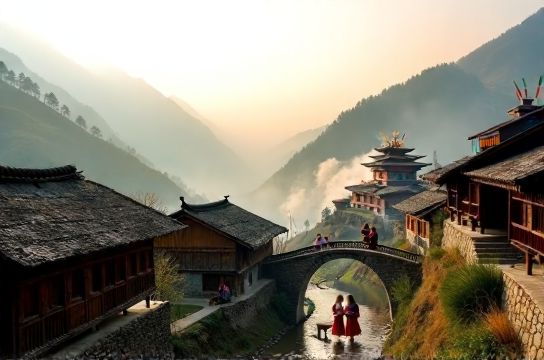
Why Visit Ethnic Mountain Villages?
China is home to 56 officially recognized ethnic groups, with 55 being minorities. Over 120 million people belong to these diverse communities, many residing in remote mountainous regions. These areas are not only breathtakingly beautiful but also rich in traditions rarely seen elsewhere.
Imagine joining a Dong族 (Dong) village’s nightly drum tower singing, tasting hand-pounded glutinous rice cakes with a Miao grandmother, or hiking through terraced fields guarded by Yao villagers in dazzling silver headdresses. This isn’t tourism — it’s connection.
Top 4 Ethnic Communities to Explore
| Ethnic Group | Region | Population (approx.) | Cultural Highlight |
|---|---|---|---|
| Miao | Guizhou, Yunnan, Sichuan | 13 million | Silver jewelry & grand sisterhood festivals |
| Dong | Hunan, Guizhou, Guangxi | 3 million | Grand Choirs (UNESCO-listed) |
| Naxi | Lijiang, Yunnan | 360,000 | Dongba script & ancient music |
| Tibetan | Tibet, Sichuan, Qinghai | 7 million | Buddhist monasteries & prayer flags |
How to Travel Responsibly
These communities thrive on tradition, not mass tourism. So how do you visit without disrupting their way of life?
- Go local, stay small: Choose homestays over hotels. Families in Zhaoxing (Dong) or Xijiang (Miao) welcome guests for authentic meals and storytelling.
- Ask before photographing: That stunning silver headpiece? It’s sacred. Respect personal space.
- Support crafts, not trinkets: Buy handwoven indigo cloth directly from artisans, not factory-made souvenirs.
Best Time to Visit
Plan around festivals! The Miao Sister’s Festival (March–April) and Dong New Year (November) are electric with song, dance, and ritual. Weather-wise, spring (April–June) and autumn (September–October) offer mild temps and clear skies.
Pro tip: Pack light layers — mountain weather changes fast!
Final Thoughts
Visiting China’s ethnic mountain communities isn’t just about ticking off destinations. It’s about listening to an elder’s folk tale under a starlit sky, learning a few words in Dongba script, or sharing a bowl of sour fish soup that tastes like generations of love.
So ditch the crowded cities. Let the mountains call. These cultures aren’t relics — they’re living, breathing, singing proof of China’s soul.