
The Silent Charm of Dong Villages: Music
- Date:
- Views:286
- Source:The Silk Road Echo
You’ve probably scrolled past photos of China’s lush countryside—misty hills, wooden stilt houses, and emerald rice paddies. But deep in the remote corners of Guizhou, Hunan, and Guangxi lives a culture that speaks not through words, but through harmony. Welcome to the world of Dong villages, where music isn’t just entertainment—it’s life.
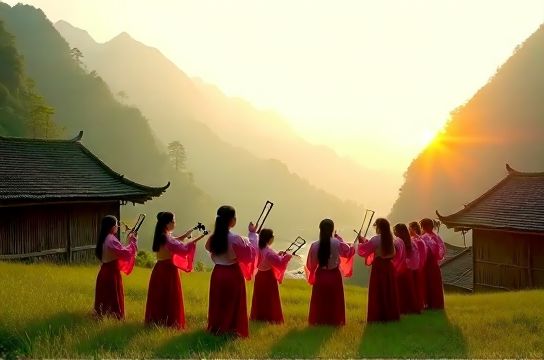
Forget loud concerts and flashy stages. Here, music flows like a quiet river through daily rituals, farming, even funeral rites. The most iconic sound? The breathtaking Dong Grand Choir—a hauntingly beautiful a cappella tradition performed entirely by women. No instruments. No sheet music. Just pure, layered voices weaving together like threads in a handwoven textile.
What makes it special? It’s all about unity. One lead singer starts, and the rest follow in perfect, resonant harmony. Their songs often tell stories—of love, harvests, or ancient legends passed down for generations. And get this: many of these melodies have been sung the same way for over 2,500 years. That’s older than your favorite classic rock band—by a long shot.
But the magic doesn’t stop there. Ever heard a *lusheng*? It’s a bamboo mouth organ that sounds like a cross between a harmonica and a flute, often played during festivals. Or how about the *kouqin*, a jaw harp that vibrates against your teeth? (Yes, really.) These aren’t just instruments—they’re cultural keepers, each with its own rhythm and meaning.
And then there’s the *Wind and Rain Bridge*—a covered wooden bridge where elders gather to sing folk tunes while watching the river roll by. It’s not just architecture; it’s a stage for living traditions. Imagine sipping herbal tea while listening to a 70-year-old grandmother belt out a centuries-old ballad. That’s the vibe.
Now, you might wonder—how has this survived modern life? Part of it is isolation. Many Dong villages are tucked away in mountain folds, far from city noise and internet chaos. But it’s also intention. Families teach kids songs before they can read. Schools include choir practice in class. Music here isn’t optional—it’s identity.
Yet, change is coming. Younger generations are moving to cities, and some worry these songs could fade. But there’s hope. UNESCO recognized the Dong Grand Choir as an Intangible Cultural Heritage, and local artists are blending traditional sounds with modern beats—think folk lyrics over soft electronic rhythms. It’s not about replacing the old, but keeping it alive in new ears.
So next time you’re overwhelmed by autoplay videos and algorithm-driven playlists, remember: somewhere in rural China, a group of women are standing in a circle, eyes closed, singing their ancestors’ dreams into the air. No mics. No fame. Just soul.
Visiting a Dong village isn’t just a trip—it’s a reset. You won’t find luxury resorts or Instagrammable murals. What you will find is realness. The kind that hums.