
The Forgotten Frontier: Borderlands and Nomadic Life in Gansu
- Date:
- Views:296
- Source:The Silk Road Echo
When you think of China, what comes to mind? Bustling cities like Shanghai or Beijing? How about the Great Wall or pandas? But let’s take a detour—way off the beaten path—to a place most people barely know exists: Gansu Province. Nestled deep in China’s northwest, Gansu isn’t just another dot on the map. It’s a forgotten frontier where ancient trade routes once thrived, cultures collided, and nomadic life still pulses under the radar.
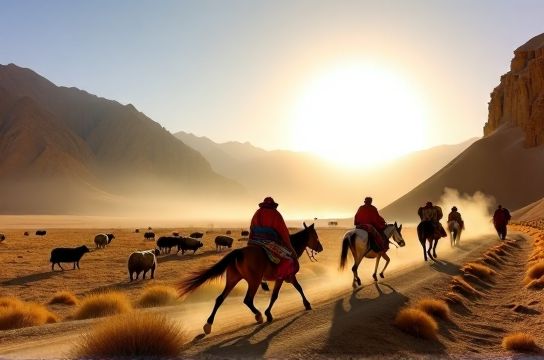
Imagine vast stretches of desert meeting rugged mountains, with the Yellow River cutting through like a lifeline. That’s Gansu for you—a land of extremes. But beyond the jaw-dropping landscapes, this region holds something even more fascinating: a living legacy of borderland culture shaped by centuries of movement, migration, and survival.
Gansu sits right on the edge of China’s historical heartland, acting as a bridge between Han Chinese civilization and the wild frontiers of Central Asia. For generations, it was part of the Silk Road—one of the most important trade networks in human history. Caravans loaded with silk, spices, and stories rolled through towns like Zhangye and Dunhuang, where Buddhist caves whisper secrets from a thousand years ago.
But while traders passed through, others stayed—and adapted. Enter the nomads. In places like the Gansu Corridor and the edges of the Tibetan Plateau, ethnic groups such as the Yugur, Dongxiang, and Monguor have preserved ways of life that modernity hasn’t quite reached. These aren’t museum exhibits; they’re real people riding horses across open grasslands, herding yaks, and keeping traditions alive in yurts that rise and fall with the seasons.
Life here isn’t easy. Winters are harsh, water is scarce, and the nearest town might be hours away. Yet, there’s a quiet strength in these communities—an unspoken resilience passed down through generations. They don’t romanticize their lifestyle; they live it. And in doing so, they guard a piece of cultural DNA that’s increasingly rare in today’s hyper-connected world.
What makes Gansu truly special is its role as a cultural melting pot. You’ll hear Tibetan chants echo near Muslim minarets. You’ll taste butter tea beside lamb skewers spiced with cumin. This isn’t forced diversity—it’s organic, born from centuries of coexistence along a restless borderland.
Yet, despite its richness, Gansu remains overlooked. Tourists flock to Lhasa or Xi’an, but few make the journey into this dusty, windswept corridor. Maybe that’s part of its charm. There’s authenticity here—an absence of polished tourist traps. Just raw, unfiltered reality.
Of course, change is coming. Roads are being paved, schools built, and mobile signals finally reaching remote valleys. Some worry this will dilute traditional lifestyles. Others see opportunity—new tools for preserving old ways in a digital age.
So what’s the takeaway? Gansu isn’t just a province. It’s a story—one of endurance, identity, and the quiet beauty of life on the margins. If you want to understand China beyond the skyscrapers, start here. Step into the forgotten frontier, where the wind carries echoes of caravans, and nomadic spirits still roam free.