
Voices from the Mountains: Preserving Traditions in Tibetan Villages
- Date:
- Views:279
- Source:The Silk Road Echo
High up in the Himalayas, where the air is thin and the sky feels close enough to touch, life moves at a different pace. In remote Tibetan villages tucked between towering peaks, ancient traditions aren’t just remembered — they’re lived every single day. From morning prayers echoing through stone homes to colorful prayer flags fluttering in the wind, these mountain communities are keeping their culture alive in the most beautiful ways.
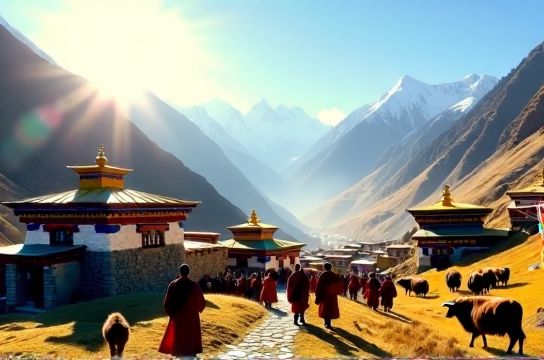
You won’t find fast food or Wi-Fi on every corner here — and honestly, that’s part of the magic. Instead, families rise with the sun, tend to yaks, spin wool by hand, and gather around butter tea as elders share stories passed down for generations. It’s not about resisting change; it’s about choosing what matters.
One of the coolest things? The festivals. Picture this: villagers dressed in bright silk chubas, masked dancers performing sacred cham rituals, and the deep hum of monks chanting in centuries-old monasteries. Losar, the Tibetan New Year, isn’t just a holiday — it’s a full-on cultural explosion. Homes are cleaned from top to bottom, special foods like khapse (crispy fried cookies) are baked, and families honor their ancestors with offerings and prayers.
But let’s keep it real — preserving tradition isn’t easy. With younger generations moving to cities for education and jobs, some fear these customs might fade. Yet, there’s hope. Local initiatives are teaching kids traditional music, dance, and thangka painting in schools. Some villages even invite respectful travelers to experience homestays, where guests learn how to make yak butter cheese or grind barley flour — all while supporting the local economy.
And speaking of travel, eco-tourism is becoming a game-changer. When done right, it doesn’t disrupt village life — it helps protect it. Tourists who come with curiosity, not cameras blazing, often leave with more than photos. They leave with respect. One elder in Nyingchi told me, 'When someone sits with us, shares our food, and listens to our songs, they carry a piece of our soul with them.'
Language is another pillar of identity. While Mandarin is widely taught, many families still speak Tibetan at home. Community-led programs are recording oral histories and creating bilingual storybooks to ensure the language thrives. After all, when a language disappears, so do the unique ways of seeing the world it carries.
At the heart of it all is resilience. These communities have faced harsh climates, isolation, and outside pressures for centuries — yet their spirit remains unbroken. Their traditions aren’t frozen in time; they evolve gently, like a river carving stone.
So next time you feel overwhelmed by the noise of modern life, think of these mountain voices — soft, steady, and strong. They remind us that progress doesn’t have to mean leaving everything behind. Sometimes, the loudest statements are made in quiet moments: spinning prayer wheels at dawn, singing folk tunes under starlit skies, or simply saying 'Tashi Delek' with a smile.
The mountains are speaking. Are we listening?