
China Hiking Trails in Remote Mountain Landscapes
- Date:
- Views:232
- Source:The Silk Road Echo
If you're craving raw, untouched beauty and a serious dose of adventure, China’s remote mountain hiking trails should be at the top of your bucket list. Forget the crowded tourist spots—these hidden gems offer jaw-dropping scenery, cultural immersion, and solitude that's hard to find anywhere else on Earth.
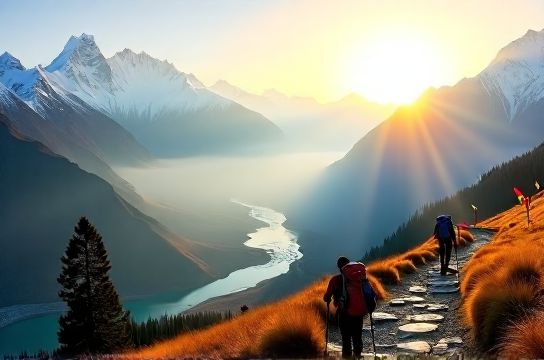
From the towering peaks of the Himalayas to the misty ridges of Yunnan, China’s backcountry is a hiker’s paradise waiting to be explored. Whether you’re an experienced trekker or stepping into multi-day hikes for the first time, these trails deliver epic views and unforgettable experiences.
Let’s dive into some of the most breathtaking remote hiking routes across China.
**1. Meili Snow Mountains (Yunnan)** This sacred range is home to Kawagebo Peak (6,740m), one of the few unconquered major peaks in the world. The Meili Kora trek circles the entire mountain group over 8–10 days, passing through Tibetan villages, prayer flag-lined passes, and glacial valleys. With altitudes reaching over 4,300m, it’s not for the faint-hearted—but the spiritual energy and panoramic views are unmatched.
**2. Gongga Shan Traverse (Sichuan)** Known as the 'King of Sichuan,' Gongga (7,556m) offers one of the most challenging and scenic treks in eastern Tibet. The classic 7–9 day loop takes you through alpine meadows, dense forests, and high-altitude plateaus. Expect dramatic shifts in climate and terrain—and possibly sightings of rare wildlife like blue sheep.
**3. Tian Shan Range (Xinjiang)** In far western China, the Tian Shan ('Heavenly Mountains') stretch across vast, sparsely populated regions. The Kongur Glacier trek near Kashgar is a true off-the-grid adventure, with crystal-clear lakes, nomadic herders, and snow-capped summits piercing the sky. Due to its remoteness, permits and local guides are essential.
**4. Haba Snow Mountain (Yunnan)** A more accessible option without sacrificing beauty, Haba Village to Haba Snow Mountain (5,396m) is perfect for acclimatization or intermediate climbers. The trail winds through Naxi and Yi ethnic villages, offering rich cultural encounters along with alpine lakes and wildflowers.
Here’s a quick comparison of these epic treks:
| Trek | Duration | Max Elevation (m) | Difficulty | Best Season |
|---|---|---|---|---|
| Meili Kora | 8–10 days | 4,300 | Hard | May–June, Sept–Oct |
| Gongga Traverse | 7–9 days | 4,600 | Very Hard | Sept–Oct |
| Kongur Glacier | 10–14 days | 4,200 | Hard | July–Aug |
| Haba Snow Mountain | 5–6 days | 4,700 | Moderate | April–June, Sept |
Planning a trek? Here are pro tips: - **Permits matter**: Many areas require special travel permits, especially near borders. - **Go local**: Hire ethnic minority guides—they know the land, weather, and culture intimately. - **Pack smart**: Weather changes fast; bring layers, water purification, and emergency gear.
China’s remote trails aren’t just walks in the woods—they’re transformative journeys through some of the planet’s last wild places. Lace up, respect the land, and let the mountains speak.