
Cross Suspension Bridges to Remote Yao Villages
- Date:
- Views:202
- Source:The Silk Road Echo
Ever dreamed of stepping into a fairy tale nestled high in the misty mountains of southern China? Welcome to the world of remote Yao villages, where ancient traditions thrive and suspension bridges dangle over roaring rivers like threads spun by mountain spirits. These breathtaking footbridges aren’t just practical—they’re symbolic gateways to a vanishing way of life.
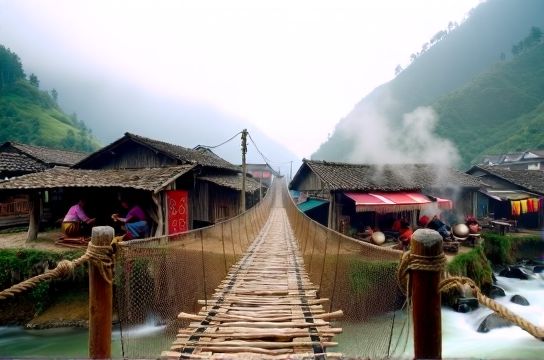
The Yao people, one of China’s 56 officially recognized ethnic groups, have lived in rugged terrains for centuries. In places like Guangxi and Hunan provinces, road access is limited or nonexistent. That’s where suspension bridges come in—hand-built, swaying pathways that connect isolated communities. Some are made from bamboo and rope; others reinforced with steel cables. Crossing one feels like walking between worlds: modernity behind you, tradition ahead.
Take the village of Huangluo, home to the Red Yao tribe. Famous for women with hair longer than their bodies (often exceeding 1.8 meters!), this village sees fewer than 200 tourists daily—tiny numbers compared to nearby Yangshuo. But getting there? Half the adventure. You’ll cross at least two suspension bridges, each spanning over 100 meters above the Longjiang River. Locals say the sway teaches humility. "The bridge moves not because it's weak," an elder once told me, "but so your heart learns to balance."
Why Visit These Hidden Villages?
It’s not just about scenic views (though they’re jaw-dropping). It’s cultural immersion. The Yao preserve unique customs—from lunar calendar festivals to handwoven indigo batik. And unlike commercialized heritage sites, these villages operate on authenticity, not表演.
| Village | Province | Bridge Length (m) | Avg. Monthly Visitors | Notable Feature |
|---|---|---|---|---|
| Huangluo | Guangxi | 120 | 5,000 | Long-haired women |
| Dazhai | Guangxi | 95 | 7,200 | Rice terrace hikes |
| Babu | Hunan | 140 | 3,800 | Ancient drum towers |
Planning your trip? Here’s the real talk: pack light, wear grippy shoes, and go early. Mornings bring golden light and fewer crowds. Most bridges allow only 2–3 people at a time—don’t rush, enjoy the rhythm of the sway. And yes, vertigo sufferers might want to look straight ahead… or embrace the wobble as part of the journey.
Responsible tourism matters. Bring small gifts like school supplies if visiting families. Avoid loud noises or intrusive photography—these aren’t stage shows. A smile and basic Mandarin or Yao greetings go miles.
In a world rushing toward hyper-connectivity, these suspension bridges remind us that some connections are worth slowing down for. They don’t just link villages—they link eras, hearts, and stories waiting to be heard.