
Untamed Beauty: Backpacking Through Qilian Mountain’s Hidden Valleys
- Date:
- Views:254
- Source:The Silk Road Echo
Forget the crowds, skip the cookie-cutter tours. If you're craving raw, untamed nature where every ridge reveals a new vista and silence isn’t interrupted by anything but wind and birdsong—welcome to the Qilian Mountains. Nestled along the northeastern edge of the Tibetan Plateau, straddling Qinghai and Gansu provinces, this rugged range is China’s best-kept secret for backpackers who want adventure without the fanfare.
Why Qilian? Because Real Adventure Still Exists
The Qilian Mountains stretch over 800 kilometers, forming a natural barrier between the Hexi Corridor and the vast Tibetan highlands. What makes them special? Pristine alpine meadows, ancient glaciers, turquoise glacial lakes, and nomadic herder culture that feels untouched by time. Unlike more commercialized trekking zones like Jiuzhaigou or Zhangjiajie, Qilian offers solitude, authenticity, and terrain that rewards the adventurous spirit.
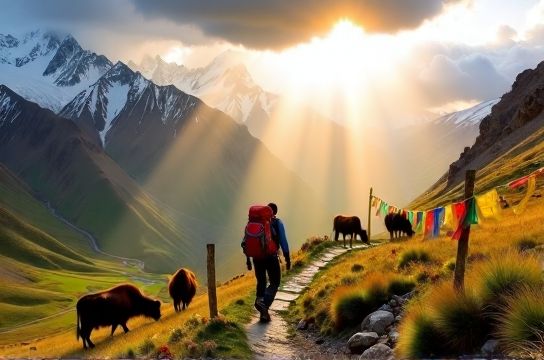
Last summer, I spent 10 days traversing three remote valleys—Yeniugou, Tuole, and Menggu—to discover landscapes so surreal they felt dreamt up. Think emerald pastures dotted with yaks, snow-capped peaks glowing at sunrise, and starry skies so clear you can see the Milky Way with the naked eye.
Trekking Stats That Speak Volumes
Here’s a quick snapshot of what you’re signing up for:
| Valley | Altitude Range (m) | Distance (km) | Difficulty | Best Season |
|---|---|---|---|---|
| Yeniugou | 3,200 – 4,100 | 45 | Medium | July–August |
| Tuole Valley | 3,500 – 4,300 | 60 | Hard | June–September |
| Menggu Valley | 3,100 – 3,900 | 35 | Easy-Medium | July–August |
Pro tip: July and August are peak months thanks to mild temps (5°C to 18°C) and blooming wildflowers. But come early September, fewer tourists, crisp air, and golden grasslands make it just as magical.
Gear Up Like a Pro
This isn’t a weekend hike. You’ll need a solid 50–70L backpack, a four-season tent (yes, even in summer—nights dip below freezing), and a sleeping bag rated to -5°C. Don’t forget water purification tablets; streams may look pure, but better safe than sorry.
One thing I underestimated? Sun exposure. At 4,000 meters, UV rays are brutal. Bring SPF 50+, sunglasses, and a wide-brimmed hat. Trust me, sunburn at 4K altitude hurts way more.
Culture Meets Wilderness
The real soul of Qilian lies in its people. Tibetan and Mongolian herders have lived here for centuries, moving with their flocks across seasonal pastures. In Yeniugou, I was invited into a yak-hair tent for butter tea and tsampa—a gesture of warmth that reminded me travel isn’t just about views, but connections.
Respect local customs: ask before photographing people, avoid loud noises near prayer flags, and never litter. These lands are sacred.
How to Get There & Final Tips
Fly into Zhangye or Xining, then hire a 4WD from local drivers (roughly ¥800–1,200/day). The last stretch to trailheads is often unpaved and demands high clearance. No public transport goes deep into the valleys—this is true backcountry.
- Permits? Not usually required for independent trekking, but check with local forestry offices.
- Wild camping? Allowed, but pack out all waste.
- Connectivity? Zero signal in most areas. Download offline maps via Gaode or Maps.me.
The Qilian Mountains aren’t easy. But that’s exactly why they’re worth it. This is where nature still rules, where every step feels like discovery, and where beauty doesn’t need an Instagram filter to shine.
If you're ready to trade comfort for wonder, strap on your boots—the hidden valleys are calling.