
Rural China by Foot: Multi-Day Hikes Through Jinggangshan’s Countryside
- Date:
- Views:218
- Source:The Silk Road Echo
Want to escape the city chaos and dive into something real? Lace up your hiking boots—Jinggangshan, deep in Jiangxi Province, is where rural China comes alive. Forget the neon-lit tourist traps; this is raw, green, misty mountain terrain dotted with red revolutionary history and warm village hospitality.
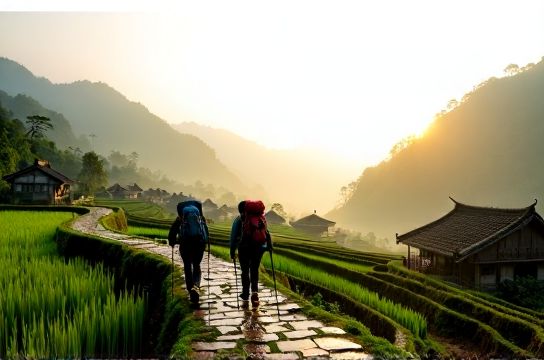
Why Hike Jinggangshan?
Nestled on the border of Hunan and Jiangxi, Jinggangshan isn’t just a symbol of China’s revolutionary past—it’s a hiker’s hidden gem. With over 90% forest coverage and elevations ranging from 300 to 1,779 meters (that’s Lushan Peak, the highest), the region offers cool breezes, terraced farmland, bamboo groves, and trails that wind through time itself.
What makes it special? It’s one of the few places in China where multi-day treks take you through active farming villages. You’ll pass elders tending tea plants, kids biking down dirt lanes, and smoke curling from stone stoves. And yes—you can stay overnight in family-run guesthouses for under $20/night.
Top 3 Multi-Day Hiking Routes
Forget crowded day hikes. These are immersive journeys:
- The Red Trail Loop (4 Days): Follow in the footsteps of Mao Zedong’s troops. Pass old barracks, cave hideouts, and wartime signal stations.
- Bamboo & Tea Traverse (3 Days): Wind through organic tea farms and dense bamboo forests. End with a tea-tasting at a local cooperative.
- Cloud Ridge Trek (5 Days): High-elevation paths with panoramic views. Best in spring or autumn when fog rolls like waves below.
Trail Stats at a Glance
| Route | Duration | Distance | Difficulty | Avg. Elevation |
|---|---|---|---|---|
| Red Trail Loop | 4 days | 68 km | Medium | 850 m |
| Bamboo & Tea Traverse | 3 days | 45 km | Easy-Medium | 620 m |
| Cloud Ridge Trek | 5 days | 92 km | Hard | 1,300 m |
What to Pack (& What to Skip)
You won’t find REI out here—local shops sell basics, but come prepared. Essential gear:
- Lightweight rain jacket (rain shows up uninvited)
- Sturdy trail shoes (not sneakers!)
- Dry bags for electronics
- A phrasebook—Mandarin helps, but dialects rule here
Best Time to Go
April–May and September–October. Summer brings leeches and sweat; winter gets chilly above 1,000m. Spring means blooming wildflowers and harvest-ready tea fields. October? Crisp air and golden rice paddies.
Cultural Etiquette Tips
This isn’t a theme park. Locals live here. A few do’s and don’ts:
- Do ask before photographing people.
- Don’t litter—even biodegradable stuff.
- Do accept offered meals. Refusing is rude.
- Don’t expect Wi-Fi everywhere. Embrace the disconnect.
Final Thoughts
Jinggangshan isn’t about ticking off landmarks. It’s about slow travel—feeling the mud on your boots, sharing a meal with a farmer who’s never left his valley, waking up to rooster calls and mountain mist. In a country racing toward the future, these trails hold onto something older, quieter, and deeply human.
If you want adventure with soul, this is it. Just pack light, tread gently, and let rural China surprise you.