
Cultural Preservation on Foot: Documenting Endangered Languages in Gaoligong Mountains
- Date:
- Views:261
- Source:The Silk Road Echo
Deep in the misty ridges of Yunnan’s Gaoligong Mountains, where emerald forests cloak steep slopes and rivers hum ancient tunes, a quiet crisis unfolds—not of nature, but of voice. Here, among scattered villages nestled between 1,500 and 3,000 meters above sea level, dozens of endangered languages teeter on the edge of silence. From the Lisu’s tonal poetry to the Akha’s oral epics, these linguistic treasures are vanishing faster than they can be recorded.
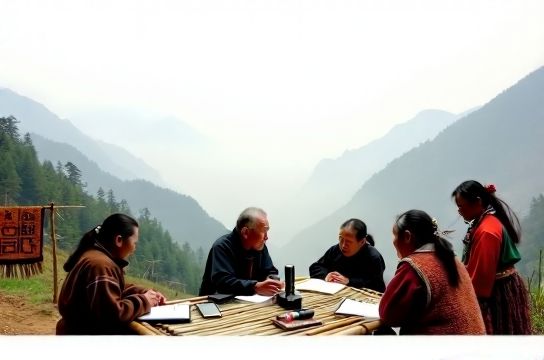
Why? Younger generations migrate to cities, Mandarin dominates schools, and elders—the last fluent speakers—pass away without passing on their mother tongues. According to UNESCO, over 60% of China’s ethnic minority languages are at risk. In the Gaoligong region alone, linguists have identified 12 distinct dialects with fewer than 5,000 speakers each—some with as few as 200.
But hope walks on two feet. A growing number of ethnolinguists, local activists, and even intrepid travelers are lacing up hiking boots and heading into remote valleys armed with audio recorders and notebooks. Their mission? To document, preserve, and revitalize languages before they fade into memory.
The Living Archive: Voices from the Mist
Teams from institutions like Minzu University of China and the Yunnan Nationalities Museum have launched field expeditions since 2015, trekking for days to reach villages like Pianma and Dulongjiang. They record folk tales, daily conversations, and ceremonial chants—each audio clip a lifeline to cultural identity.
One breakthrough came in 2021, when researchers documented the Pumi dialect of northern Nujiang, previously thought to have only 50 fluent speakers. With community support, they recorded over 8 hours of material, including a 40-minute creation myth passed down orally for centuries.
Data That Speaks Volumes
Here’s a snapshot of linguistic diversity in the Gaoligong region:
| Language | Estimated Speakers | Endangerment Level (UNESCO) | Primary Location |
|---|---|---|---|
| Lisu | 700,000 (global) | Vulnerable | Nujiang Prefecture |
| Akha | ~6,000 | Definitely Endangered | Southern Gaoligong |
| Dulong (Derung) | ~7,000 | Severely Endangered | Dulong Valley |
| Nusu | ~3,000 | Critically Endangered | Pianma Township |
This isn’t just academic work—it’s emotional labor. "When Grandma sings the old songs, I feel connected to something bigger," says Ai Lin, a 24-year-old Lisu teacher helping digitize recordings in her village. "Now I’m teaching kids our language through games and apps. It’s not too late."
How Travelers Can Help (Yes, Really)
Eco-conscious trekkers are joining the cause. Responsible tour operators now offer "language legacy hikes," where visitors spend mornings recording stories with elders and afternoons learning basic phrases. No PhD required—just respect and a willingness to listen.
Best time to visit? May–June or September–October, when trails are dry and festivals abound. The annual Kuoshi Festival of the Lisu people (November) is especially rich in song and storytelling.
The Road Ahead
Technology is accelerating preservation. AI-powered transcription tools, developed in partnership with local universities, are helping sort through thousands of audio files. Meanwhile, bilingual storybooks and YouTube channels in minority languages are reaching wider audiences than ever.
Yet the heart of this movement remains human—to walk, to listen, to remember. As one elder in Dulongjiang told a visiting researcher: "If our words disappear, who will tell our children who we were?"
So next time you plan an adventure, consider one that gives back. Strap on your pack, head into the highlands, and let your footsteps echo with purpose. In the Gaoligong Mountains, every conversation could be a legacy saved.