
Authentic Village Life in China: Rice Planting and Harvest Festivals in Hunan
- Date:
- Views:269
- Source:The Silk Road Echo
If you're craving a travel experience that feels real—where life moves with the seasons, not Wi-Fi signals—then rural Hunan is your soul’s next destination. Forget crowded tourist traps; here, emerald rice terraces ripple across misty hills, and festivals burst with drumbeats older than your great-grandfather’s stories.
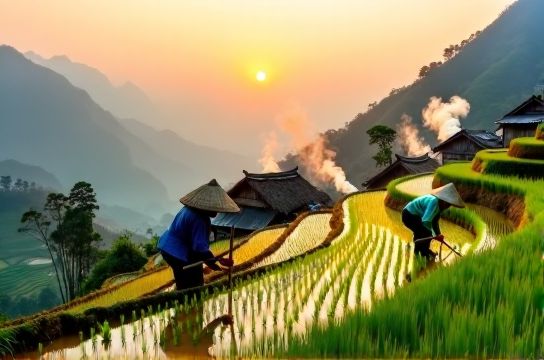
Hunan isn’t just about spicy mapo tofu and Chairman Mao’s hometown. Deep in villages like Chadong and Zhangjiajie’s hinterlands, farmers still plant rice by hand, bending under golden suns in rituals unchanged for centuries. And when harvest time hits? Oh, it’s a full-blown celebration of gratitude, music, and sticky rice cakes.
Why Hunan’s Rice Culture Stands Out
Over 60% of Hunan’s land is hilly or mountainous, yet locals have mastered terrace farming since the Ming Dynasty. The province produces over 28 million tons of rice annually—second only to Heilongjiang—but it’s the cultural heartbeat behind each grain that truly amazes.
Rice here isn’t just food. It’s identity. From planting (April–May) to harvesting (September–October), every stage has its own rhythm, song, and spiritual meaning. Locals honor the Earth God during transplanting and throw wild harvest festivals called Guzang Festival or Mengge Singing Fairs.
Inside the Planting Season: Backbreaking Beauty
Between late April and May, watch farmers wade into flooded paddies, backs bent at impossible angles, planting seedlings row by perfect row. No machines. Just hands, feet, and generations of muscle memory.
Women often lead this work, singing call-and-response folk songs to keep pace. One villager told me, “The mud remembers our ancestors’ footsteps.” Poetic? Absolutely. But also exhausting—workers average 15,000 steps per day during peak planting.
The Magic of Harvest Festivals
When golden waves sway in autumn, villages erupt in color and sound. The Tujia and Miao ethnic groups host vibrant harvest festivals featuring:
- Drum tower dances
- Bamboo pole jumping
- Handmade glutinous rice dumplings (zongzi)
- Antiphonal singing that echoes through valleys
In Fenghuang Ancient Town, the New Rice Festival draws thousands. Families offer the first grains to ancestors before feasting. Meanwhile, in Longshan County, the Tujia people perform the Baishou Dance—a UNESCO-recognized ritual lasting up to five days.
Data Snapshot: Hunan’s Rural Rhythms
| Activity | Time of Year | Duration | Participation Rate* |
|---|---|---|---|
| Rice Transplanting | April–May | 3–4 weeks | ~78% of villagers |
| Harvesting | Sept–Oct | 2–3 weeks | ~85% of villagers |
| Harvest Festivals | Oct (post-harvest) | 1–5 days | ~92% attendance |
| Off-season Crafts | Nov–Mar | Ongoing | ~60% (weaving, bamboo) |
*Based on 2023 Hunan Rural Lifestyle Survey (sample: 1,200 villagers)
How to Experience It Yourself
You don’t need to be a farmer to join. Eco-tourism homestays in Mengdonghe Valley or Dehang Canyon let travelers:
- Plant or harvest rice with families
- Learn traditional cooking (think smoked pork and pickled fish)
- Stay in stilted wooden homes overlooking rice fields
Pro tip: Visit between September 20–October 10 for maximum festival action. Pack light clothes, good shoes, and an appetite.
This isn’t ‘performative’ culture—it’s lived reality. And once you’ve shared a cup of homemade rice wine under a starlit sky, you’ll understand: Hunan’s villages don’t just grow rice. They grow belonging.