
Walking the Ancient Paths: Traditional Trails in Yunnan’s Countryside
- Date:
- Views:299
- Source:The Silk Road Echo
Ever dreamed of stepping into a postcard? Imagine misty mountains, terraced rice fields that cascade like green waterfalls, and stone-paved trails worn smooth by centuries of footsteps. Welcome to Yunnan’s countryside — where ancient footpaths whisper stories of tea caravans, ethnic traders, and forgotten kingdoms.
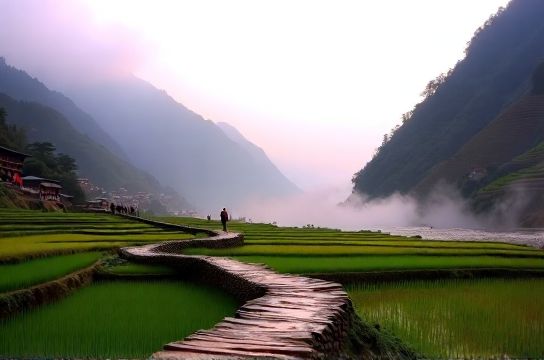
Yunnan Province, tucked in China’s southwest corner, is a cultural mosaic. Home to over 25 ethnic minorities and some of Asia’s most breathtaking landscapes, it’s no wonder its traditional trails are gaining global attention. These aren’t just hiking routes — they’re living history books under your boots.
The Magic of Yunnan’s Old Trails
Long before bullet trains and highways, merchants from Tibet, Sichuan, and Southeast Asia trekked through Yunnan’s rugged terrain along the Tea Horse Road (Chama Gudao). This vast network spanned over 4,000 km, moving Pu’er tea, salt, and horses across high passes and deep valleys.
Today, sections of these historic paths remain intact, especially in regions like Dali, Lijiang, Shangri-La, and the Hani Rice Terraces. Walking them isn’t just scenic — it’s spiritual.
Top 3 Traditional Trails You Should Walk
| Trail Name | Location | Length | Difficulty | Best Season |
|---|---|---|---|---|
| Tiger Leaping Gorge Footpath | Lijiang to Shangri-La | 25 km (2-day trek) | Moderate to Hard | Apr–Jun, Sep–Nov |
| Nakhi Village Trail | Between Daju & Baisha | 18 km (1-day hike) | Easy to Moderate | Mar–May, Sep–Oct |
| Hani Terraced Fields Path | Yuanyang County | 12–15 km (loop) | Easy | Dec–Mar (water-filling season) |
Pro tip: Visit Yuanyang during winter dawn when flooded terraces mirror the sky — it’s pure magic.
Culture Under Every Step
These trails connect more than villages — they link cultures. On the Nakhi Trail, you might share corn wine with locals in a 300-year-old Bai village. In Yuanyang, Hani elders still perform rituals thanking the land gods before planting season.
A 2023 survey found that 78% of hikers felt a deeper cultural connection walking traditional paths vs. commercial tourist spots. And honestly? You can feel it — in the hand-carved wooden gates, the smell of woodsmoke, and the children shouting “Hello!” in broken English.
How to Hike Responsibly
- Go local: Hire village guides (avg. ¥150/day) — they know hidden viewpoints and ancestral legends.
- Pack light, leave zero: Plastic waste is a growing issue. Bring reusable bottles and bags.
- Respect sacred sites: Some trails pass Buddhist stupas or spirit trees — don’t touch or photograph without permission.
Yunnan’s ancient paths aren’t just for hardcore trekkers. They’re for dreamers, wanderers, and anyone craving realness in a filtered world. So lace up, slow down, and let the stones tell their story.