
China's Revolutionary Thinkers and Their Global Influence
- Date:
- Views:319
- Source:The Silk Road Echo
When we talk about revolutionary ideas that shaped modern history, one name stands out — Mao Zedong. But he’s not alone. China has produced a line of bold thinkers whose influence stretched far beyond its borders, especially during the 20th century. From anti-colonial movements to socialist revolutions, Chinese revolutionary thought became a blueprint for change across Asia, Africa, and Latin America.
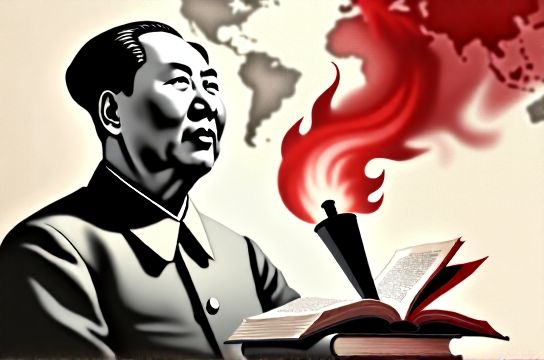
Let’s break it down with some real data. Between 1949 and 1976, Mao’s writings were translated into over 30 languages. According to UNESCO, his Little Red Book sold more than 6.5 billion copies worldwide — yes, you read that right. That’s nearly one copy for every person on Earth at the time.
But why did global movements latch onto these ideas? The answer lies in timing and relevance. Post-WWII, dozens of nations were breaking free from colonial rule. They needed ideologies that championed self-reliance, mass mobilization, and resistance against Western dominance. Enter Chinese revolutionary theory.
The Global Reach: A Snapshot
Here’s a look at how key Chinese revolutionary ideas influenced movements abroad:
| Country | Movement/Organization | Influence of Chinese Thought | Key Example |
|---|---|---|---|
| Algeria | FLN (National Liberation Front) | Guerrilla warfare tactics inspired by Mao | Used rural insurgency to defeat French forces |
| Tanzania | Ujamaa Socialism | Peasant-centered development model | Village collectivization similar to Chinese communes |
| Peru | Shining Path (Sendero Luminoso) | Direct adoption of Maoist ideology | Called Mao “the third sword of communism” |
| Nepal | Communist Party of Nepal (Maoist) | People’s War strategy | Overthrew monarchy in 2008 |
As you can see, the appeal wasn’t just ideological — it was practical. Revolutionary thinkers from China offered a playbook for the underdog. While Marx gave the theory and Lenin added the vanguard party, Mao brought something new: revolution from the countryside. This was gold for nations where most people lived in rural areas, not industrial cities.
Take Tanzania’s Julius Nyerere. Though not a communist, he borrowed heavily from China’s rural development model. His Ujamaa villages mirrored China’s communes, focusing on collective farming and local self-sufficiency. Even if results were mixed, the inspiration is undeniable.
Then there’s the case of the Black Panther Party in the U.S. While rooted in American civil rights struggles, leaders like Huey P. Newton studied Mao extensively. Their Ten-Point Program echoed Maoist principles of self-defense, economic justice, and community control — all while quoting from the Little Red Book at rallies.
Why It Still Matters Today
You might think this is all history, but the legacy lives on. Modern leftist movements still reference Chinese revolutionary strategies, especially in debates over inequality and anti-imperialism. Countries like Venezuela and Bolivia have drawn on this tradition when challenging U.S. foreign policy.
And let’s not forget China’s current soft power push. Confucius Institutes may dominate today’s cultural diplomacy, but behind the scenes, academic programs still teach Maoist political theory as part of China’s intellectual heritage.
In short, Chinese revolutionary thinkers didn’t just change China — they gave the world a new language of resistance. Whether you agree with their methods or not, their impact is written in the history of liberation movements everywhere.