
Defining Moments in Chinese History Through Leaders
- Date:
- Views:332
- Source:The Silk Road Echo
If you're diving into the epic saga of Chinese history, you can't ignore the leaders who shaped its destiny. From ancient emperors to modern revolutionaries, these figures didn’t just make decisions—they moved civilizations. Whether you're a student, a history buff, or just curious about how power shaped one-fifth of humanity, this guide breaks down the most defining leaders in Chinese history and their game-changing moments.
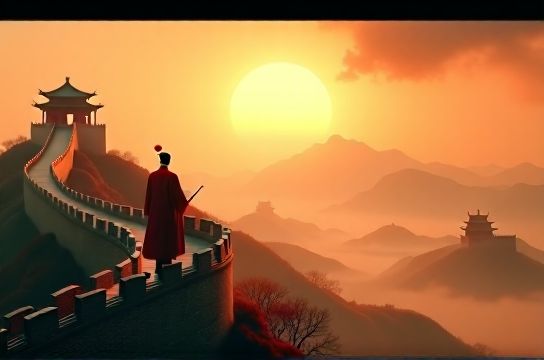
The Emperor Who United China: Qin Shi Huang
Let’s kick it off with the OG unifier—Qin Shi Huang. In 221 BCE, he crushed the Warring States and became the first emperor of a unified China. Love him or hate him, the guy got things done. He standardized weights, measures, writing, and even the damn axle lengths on carts. Talk about control freak with vision.
And yes, he built the Terracotta Army—over 8,000 life-sized soldiers guarding his tomb. But here’s the kicker: his reign was brutal. Book burnings? Check. Forced labor? Double check. Yet, without him, China might’ve stayed fractured for centuries.
Wisdom Over War: Emperor Wen of Han
After Qin’s harsh rule collapsed, Emperor Wen of Han (r. 180–157 BCE) flipped the script. He slashed taxes, reduced punishments, and ruled with Confucian-inspired compassion. His era, part of the 'Rule of Wen and Jing,' is often called China’s first golden age of governance.
| Leader | Reign Period | Key Achievement | Lifespan Impact |
|---|---|---|---|
| Qin Shi Huang | 221–210 BCE | Unified China, built Great Wall foundations | Created imperial blueprint |
| Emperor Wen of Han | 180–157 BCE | Stable, humane governance | Model for Confucian rule |
| Wu Zetian | 690–705 CE | Only female emperor | Broke gender barriers |
| Mao Zedong | 1949–1976 | Founded PRC | Reshaped modern China |
The Only Woman Emperor: Wu Zetian
Move over kings—Wu Zetian ran the show. Officially the only female emperor, she ruled during the Tang Dynasty with sharp political instincts. She promoted meritocracy, expanded the civil exam system, and even created her own characters. Was she ruthless? Sure. But in a male-dominated world, she didn’t have the luxury of being soft.
The Revolutionary: Mao Zedong
Jumping to the 20th century, no list is complete without Mao Zedong. In 1949, he founded the People’s Republic of China after a grueling civil war. His policies, like the Great Leap Forward and Cultural Revolution, were controversial—but undeniably transformative. Love him or not, Mao redefined China’s global identity.
Today, his image still looms large—on banknotes, in classrooms, and in debates about authoritarianism vs. national unity.
Why These Leaders Matter Today
These aren’t just dusty names in a textbook. Their choices echo in today’s China—from centralized power to education reforms. Understanding them helps us grasp how tradition and transformation collide in one of the world’s oldest continuous civilizations.
So next time you hear about China’s rise, remember: it’s built on the shoulders of titans who dared to lead.