
Uncovering the Roots of Chinese History and Its Icons
- Date:
- Views:246
- Source:The Silk Road Echo
If you're diving into the world of ancient civilizations, one name that always stands out is Chinese history. Seriously, where do we even start? With over 5,000 years of recorded past, China isn’t just old—it’s legendary. From dynasties that shaped empires to icons who changed philosophy forever, this is a journey worth taking. And trust me, whether you’re a history buff or just curious, understanding Chinese history gives you serious cultural street cred.
Why Chinese History Matters Today
You might be thinking: 'Ancient stuff—how relevant can it be?' But here’s the kicker: modern politics, business etiquette, and even family values in East Asia are deeply rooted in traditions from centuries ago. Confucius? Sun Tzu? Yeah, they’re not just names on a textbook—they’re still quoted in boardrooms and classrooms worldwide.
The Dynastic Timeline You Should Know
Let’s break it down without the snooze factor. The major dynasties weren’t just random rulers—they each brought game-changing innovations. Here’s a quick snapshot:
| Dynasty | Duration | Key Contribution |
|---|---|---|
| Shang | 1600–1046 BCE | Earliest written records (oracle bones) |
| Zhou | 1046–256 BCE | Mandate of Heaven concept |
| Qin | 221–206 BCE | First unified empire; Terracotta Army |
| Han | 206 BCE–220 CE | Silk Road expansion; paper invention |
| Tang | 618–907 | Golden age of arts and cosmopolitan culture |
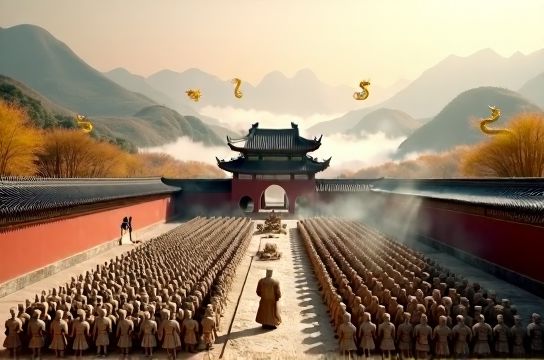
See that Qin Dynasty row? That’s when Emperor Qin Shi Huang didn’t just unify China—he built the foundation for centralized rule that influenced governments for millennia. And yes, he also gave us the jaw-dropping Terracotta Warriors, which archaeologists are still uncovering new sections of today.
Meet the Icons Who Shaped Thought
No talk about Chinese history is complete without its thinkers. Confucius preached harmony and moral leadership—his ideas became the backbone of education and governance. Then there’s Laozi, father of Daoism, who said, 'The journey of a thousand miles begins with one step.' Deep, right?
And let’s not forget Wu Zetian—the only female emperor in Chinese history. She ruled during the Tang Dynasty with an iron grip and expanded the civil service system. Talk about breaking glass ceilings 1,300 years ago!
How to Explore This Legacy Yourself
Want to go beyond Wikipedia? Visit museums like the National Museum of China in Beijing or check out UNESCO World Heritage Sites like the Forbidden City. Even better—take a digital deep dive through academic platforms like JSTOR or Google Arts & Culture, where you can zoom in on ancient scrolls and palace blueprints.
In short, Chinese history isn’t just about memorizing dates. It’s about understanding how ideas survive, evolve, and shape our world. So next time someone mentions dynasties or philosophers, you’ll have more than a soundbite—you’ll have context, clarity, and confidence.