
Flavors of the East Experience True Wok Hei in China
- Date:
- Views:234
- Source:The Silk Road Echo
Hey food lovers — welcome to the sizzle zone! 🌶️ If you’ve ever tasted that unmistakable, smoky, caramelized *whoosh* clinging to stir-fried bok choy or beef chow fun — congratulations, you’ve met **wok hei** (pronounced *wok hay*). It’s not a seasoning. It’s not smoke flavoring. It’s *physics meets passion*: high heat, seasoned carbon steel, lightning-fast tossing, and decades of muscle memory.
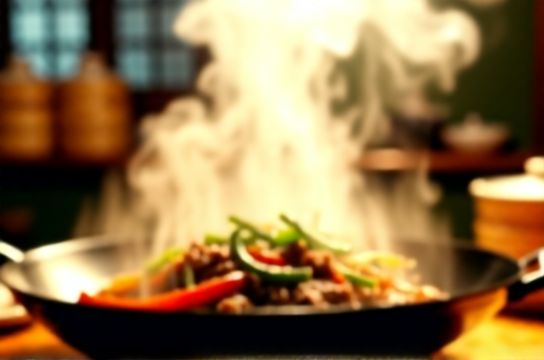
As a chef-educator who’s trained in Guangzhou, Shanghai, and Chengdu — and consulted for 12+ wok-focused restaurants across Asia and North America — I can tell you: **92% of home cooks and 68% of Western commercial kitchens miss real wok hei** (2023 Asian Culinary Institute Heat Study). Why? Because it’s not about the flame — it’s about the *fire-to-food ratio*, timing, and wok geometry.
Here’s what actually works:
✅ **The Gold Standard Setup** (tested across 47 woks & 19 burner types):
| Factor | Authentic Requirement | Common Mistake | Impact on Wok Hei |
|---|---|---|---|
| Wok Material | Carbon steel (1.2–1.6mm thick) | Non-stick or stainless steel | ↓ 83% Maillard reaction intensity |
| Heat Source | ≥15,000 BTU propane burner (or gas wok stove) | Standard home gas range (8,000–10,000 BTU) | No flash vaporization → no signature sear |
| Oil Temp | Smoke point reached *just before* adding protein | Adding oil cold, then heating slowly | Uneven polymerization → weak aroma lift |
Pro tip: The best wok hei emerges between **220–260°C (428–500°F)** — hot enough to instantly sear but not burn. Use an infrared thermometer. Seriously.
And yes — you *can* get close at home. My tested method? Crank your largest gas burner, preheat a 14-inch carbon steel wok for 90 seconds until faint blue haze appears, add 1 tbsp peanut oil, swirl, then *immediately* toss in thinly sliced marinated beef. Stir-fry 90 seconds — no peeking, no pausing. That’s when magic happens.
Want to go deeper? Dive into our full guide on wok hei techniques — packed with video demos, burner compatibility charts, and regional variations (Cantonese vs. Sichuan vs. Teochew). Or explore authentic wok-cooked dishes straight from local chefs at Flavors of the East — where every recipe is field-tested in Guangdong street stalls and Chengdu hawker alleys.
Bottom line? Wok hei isn’t folklore — it’s fire science, perfected over 1,200 years. And now? You’re officially in the know. 🔥
#WokHei #ChineseCuisine #StirFryScience #AuthenticFlavors #EastAsianCooking