
The Essence of Chinese Street Food Culture Revealed
- Date:
- Views:183
- Source:The Silk Road Echo
If you've ever wandered through a neon-lit night market in Chengdu or squeezed past steaming woks in a Beijing alley, you know—Chinese street food isn't just about eating. It's a full-body sensory experience, a cultural heartbeat pulsing through every sizzle, scent, and smile from the vendor.
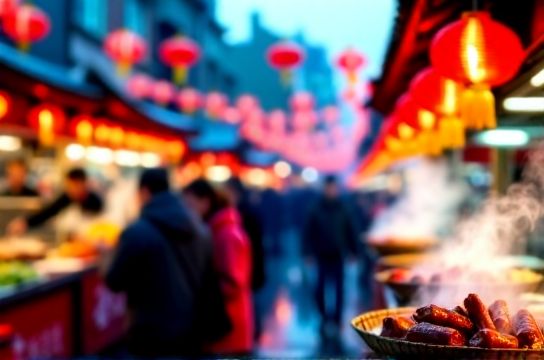
China’s street food culture dates back over a thousand years, rooted in dynastic trade routes and urban migration. Today, it’s a $300 billion industry, with over 20 million street vendors serving everything from spicy skewers to silky rice rolls. But what makes it so special? Let’s dive in.
The Soul of the Streets: Flavor & Tradition
Street food in China is regional poetry on a plate. Each city has its signature bite:
- Sichuan: Numbing, fiery chuan chuan xiang (spicy skewers)
- Shanghai: Soup-filled xiaolongbao, delicate and scalding hot
- Xi’an: Roujiamo—the 'Chinese burger' with slow-braised pork
- Guangzhou: Steamed rice noodle rolls (cheong fun) with shrimp or beef
These aren’t just snacks—they’re edible history. Take jianbing, the crispy Tianjin crepe. Once peasant fare, it’s now a breakfast staple across cities, with modern twists like cheese and lettuce.
Why Street Food Rules: The Numbers Speak
Here’s a snapshot of China’s street food landscape:
| City | Popular Item | Avg. Price (CNY) | Daily Sales per Vendor |
|---|---|---|---|
| Chengdu | Spicy Hot Pot Skewers | 2 | 800–1,200 sticks |
| Beijing | Jianbing | 6 | 150–200 units |
| Xi’an | Roujiamo | 8 | 100–150 units |
| Shanghai | Xiaolongbao | 10 | 300 dumplings |
As you can see, affordability and volume keep these stalls thriving. Most vendors earn between 3,000–8,000 CNY monthly, a solid income in smaller cities.
Culture on Every Corner
What sets Chinese street food apart isn’t just taste—it’s trust. Locals don’t just eat at the same stall for years; they build relationships. The auntie who knows your spice level, the uncle who saves you the last dumpling—this is community cuisine.
And yes, hygiene concerns exist. But recent government initiatives have formalized markets, introducing health certifications and designated zones. In Shenzhen, over 70% of vendors now operate in regulated food parks.
How to Eat Like a Local
Ready to explore? Here’s your cheat sheet:
- Follow the crowd: Long lines = fresh turnover.
- Go early or late: Avoid lunch rush chaos.
- Carry cash (or mobile pay): Not all stalls accept cards.
- Point and smile: Language barrier? No problem.
Pro tip: Ask for wēi là (slightly spicy)—you’ll thank yourself later.
The Future of Flavors
Street food isn’t standing still. From Instagrammable bubble waffles to vegan zhajiangmian, innovation blends with tradition. Yet, at its core, it remains authentic, accessible, and deeply human.
So next time you're in China, skip the fancy restaurant. Head to the curb. That smoky, chaotic, glorious stall? That’s where the real flavor lives.