
Living Local Lifestyle China from Market Mornings to Night Bites
- Date:
- Views:308
- Source:The Silk Road Echo
Want to live like a true local in China? Skip the tourist traps and dive headfirst into the rhythm of everyday life — from bustling morning markets to sizzling street food under neon-lit alleys. This isn’t just travel; it’s immersion.
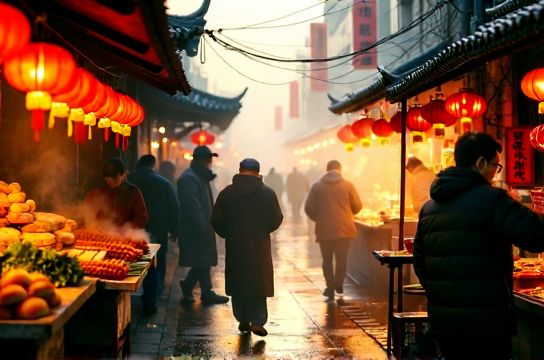
The Magic of Morning Markets
Set your alarm early — real early. By 6:30 AM, neighborhood wet markets are already buzzing. Locals clutch reusable bags, haggling over bok choy, free-range eggs, and still-wriggling fish. These aren’t supermarkets; they’re social hubs where grannies debate radish freshness like wine connoisseurs.
In cities like Chengdu or Guangzhou, market culture is sacred. Vendors know their customers by name, and cashless payments flash faster than you can say “zhè ge duōshǎo qián?” (How much is this?)
| City | Market Name | Best Time to Visit | Local Specialty |
|---|---|---|---|
| Beijing | Panjiayuan Market | 6:00–9:00 AM | Fresh jianbing batter |
| Shanghai | Qibao Old Street Market | 7:00–10:00 AM | Steamed xiaolongbao |
| Chengdu | Cuandao Market | 6:30–9:30 AM | Sichuan peppercorns & pickled veggies |
| Guangzhou | Qingping Market | 5:30–8:30 AM | Dried herbs & exotic mushrooms |
Street Food: The Soul of Chinese Urban Life
If mornings belong to the markets, nights belong to the street stalls. Wander any back alley after dark and follow the smoke trails — that’s where magic happens.
From skewered lamb kebabs in Xi’an to stinky tofu in Changsha, China’s night bites are bold, cheap, and unforgettable. And here’s a pro tip: the busiest stall usually has the freshest turnover. Locals don’t queue for nothing.
A 2023 survey by Meituan, China’s top food delivery app, revealed that over 78% of urban residents eat street food at least once a week. In tier-2 cities like Kunming or Yangshuo, that number jumps to 92%. That’s not just appetite — that’s culture.
How to Eat Like a Local (Without Getting Sick)
Worried about stomach trouble? Don’t be — just be smart. Look for stalls with high turnover, boiling water in open view, and gloves (yes, some vendors actually use them now).
- Start mild: Try scallion pancakes or roujiamo before diving into century eggs.
- Follow the crowd: If locals are eating it, it’s probably safe.
- Carry digestive aids: Pack probiotics or smecta — better safe than sorry.
And never underestimate the power of hot tea. It’s not just tradition; it helps sanitize what goes into your body.
Beyond Food: Living the Local Rhythm
Living like a local isn’t just about what you eat — it’s how you move through the day. Join morning tai chi sessions in parks. Ride shared bikes instead of Didi. Learn to scan QR codes like a pro (spoiler: it’s on Alipay or WeChat Pay).
Engage. Smile. Attempt basic Mandarin phrases. You’ll be rewarded with nods, chuckles, and sometimes, a free sample of candied hawthorn.
China’s charm lies in its details — the steam rising from a dumpling basket, the clatter of mahjong tiles in a courtyard, the old man frying eggs on a rusty griddle at midnight. This is real life. Raw, rhythmic, and ridiculously delicious.