
Exploring Daily Life in China Through Local Markets and Street Food
- Date:
- Views:270
- Source:The Silk Road Echo
If you really want to feel China, skip the skyscrapers and tourist traps—head straight to the local markets and street food stalls. These are the beating heart of Chinese daily life, where tradition sizzles on grills, bargaining is an art form, and every bite tells a story.
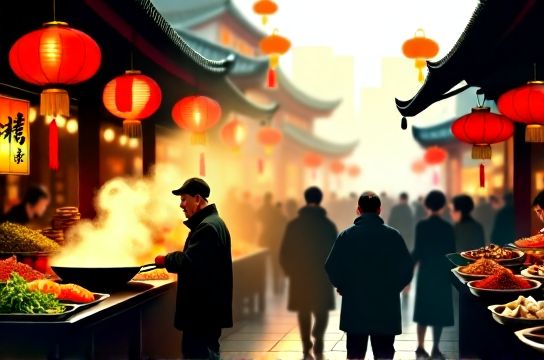
China’s street food culture isn’t just about convenience—it’s a way of life. According to a 2023 report by China Food and Drug Administration, over 68% of urban residents eat street food at least once a week. In cities like Chengdu and Xi’an, that number jumps to nearly 85%. Why? Because it’s delicious, affordable, and deeply woven into the social fabric.
The Market Experience: A Feast for the Senses
Start your morning at a wet market—yes, “wet” because of the fresh fish tanks and damp floors. These bustling hubs sell everything from live frogs to fragrant herbs you’ve never heard of. Vendors shout prices, neighbors catch up over bok choy, and the air hums with energy.
Take Shanghai’s Yuyuan Market or Beijing’s Panjiayuan Flea Market—they’re not just for tourists. Locals come here for deals on spices, handmade dumplings, and even traditional medicine ingredients.
Street Food Hotspots You Can’t Miss
Each region has its signature snacks, shaped by climate, history, and local pride. Here’s a taste of what’s cooking across China:
| City | Must-Try Dish | Price Range (CNY) | Flavor Profile |
|---|---|---|---|
| Chengdu | Chuan Chuan Xiang (Spicy Skewers) | 15–30 | Numbing, Spicy, Aromatic |
| Xi’an | Roujiamo (Chinese Hamburger) | 8–15 | Savory, Meaty, Fragrant |
| Guangzhou | Cantonese Dim Sum | 20–50 | Delicate, Savory, Steamed |
| Beijing | Jianbing (Savory Crepe) | 5–10 | Crispy, Eggy, Spicy |
| Xiamen | Shacha Noodles | 12–20 | Savory, Smoky, Peanut-Infused |
Pro tip: Follow the locals. If there’s a long line of office workers at 8 a.m., that jianbing stand is gold.
Why This Matters: More Than Just Food
Eating street food in China is a cultural immersion. It breaks down barriers. Share a skewer with a stranger, try saying “Yíge, xièxie!” (One, please!) and you’ll get a smile—or maybe a free sample.
And let’s talk value: For under 30 RMB ($4 USD), you can have a full meal that’s fresher and more flavorful than most restaurants. No wonder street vendors contribute an estimated 2.3 trillion CNY annually to China’s economy (National Bureau of Statistics, 2022).
Tips for Travelers
- Go early: Best selection and hygiene—vendors prep fresh in the morning.
- Carry cash: Many stalls still don’t accept foreign cards.
- Be adventurous but smart: If something looks off (or too alive), maybe skip it.
- Learn a few phrases: “Zhè ge shì shénme?” (What is this?) goes a long way.
In the end, exploring China through its markets and street food isn’t just about eating—it’s about connecting. It’s the smell of cumin and sesame at dusk, the clatter of woks, and the warmth of a vendor who remembers your order. That’s the real China.